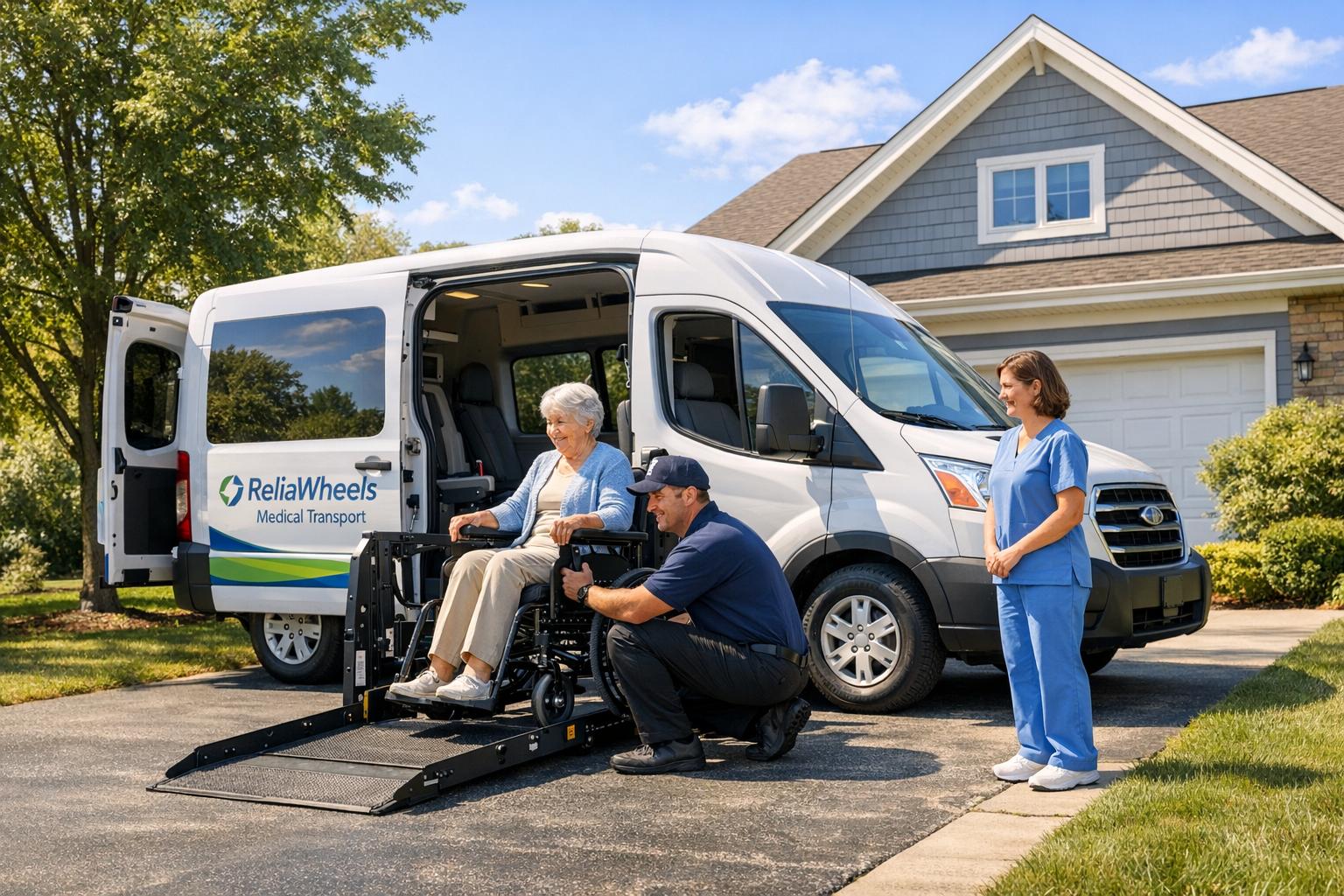
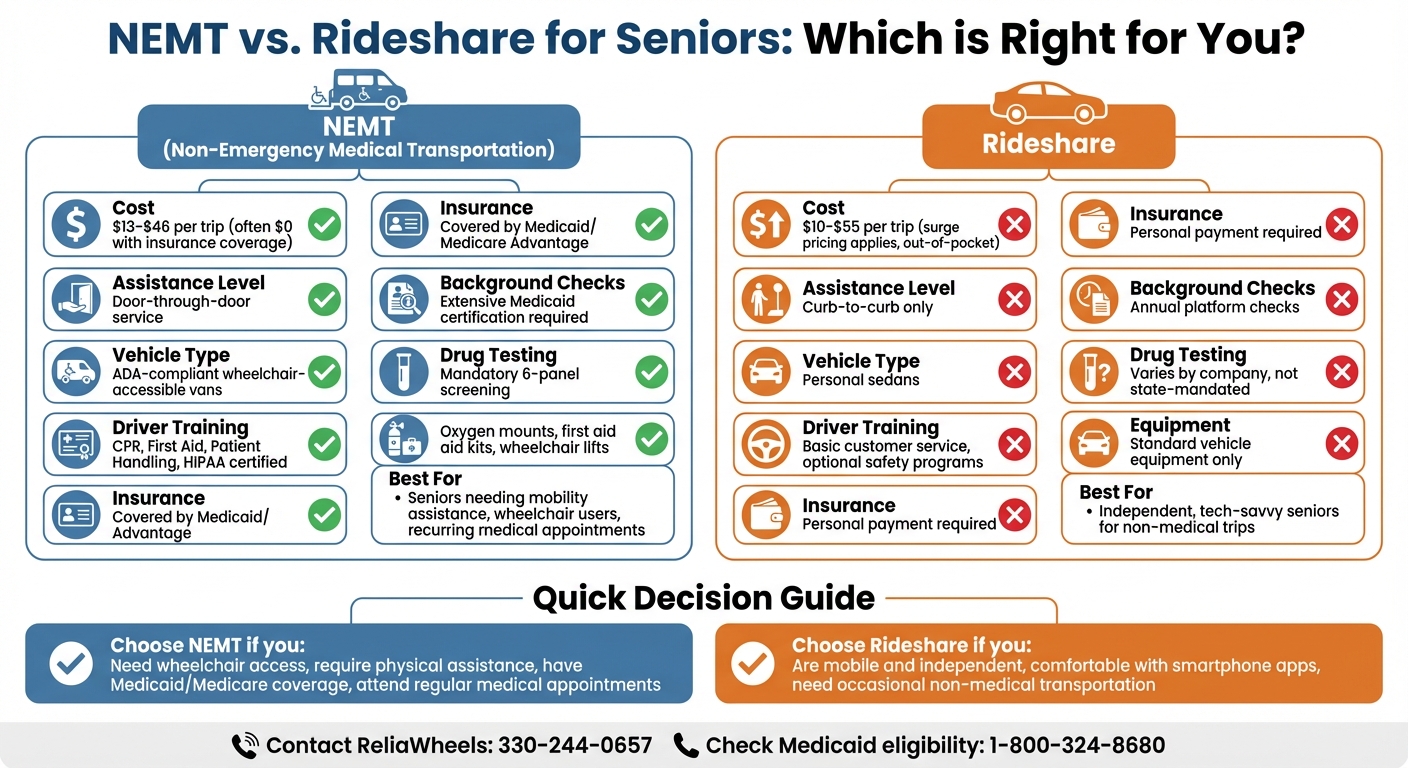
Need a ride to medical appointments in Northeast Ohio? Seniors have two main options: Non-Emergency Medical Transportation (NEMT) and rideshare services like Uber. Here's a quick breakdown:
- NEMT: Offers regulated, door-through-door assistance with trained drivers and wheelchair-accessible vehicles. Often covered by Medicaid or Medicare.
- Rideshare: Convenient app-based service, but limited to curb-to-curb assistance with personal vehicles. Costs vary and are usually out-of-pocket.
Quick Comparison
| Feature | NEMT | Rideshare |
|---|---|---|
| Cost | $13–$46 (often covered) | $10–$55 (out-of-pocket) |
| Assistance Level | Door-through-door | Curb-to-curb |
| Vehicle Type | ADA-compliant vans | Personal sedans |
| Driver Training | Medical and safety certified | Basic customer service |
| Insurance Coverage | Medicaid/Medicare eligible | Personal payment only |
Bottom line: NEMT is ideal for seniors needing extra care, while rideshare works for those who are independent and tech-savvy. Choose based on your mobility needs and budget.
NEMT vs Rideshare Comparison for Seniors: Safety, Cost, and Assistance Levels
What is Non-Emergency Medical Transportation (NEMT)?
NEMT Service Definition
Non-Emergency Medical Transportation (NEMT) offers licensed and secure rides for seniors and individuals with disabilities who need to attend healthcare appointments. Unlike standard transportation options, NEMT providers in Ohio follow strict licensing and regulatory guidelines to ensure both driver and vehicle safety.
"We're a waiver provider through the Area Agency on Aging and - unlike ride-share companies - licensed and regulated to ensure the quality and safety of our vehicles, drivers, and more." - ReliaWheels
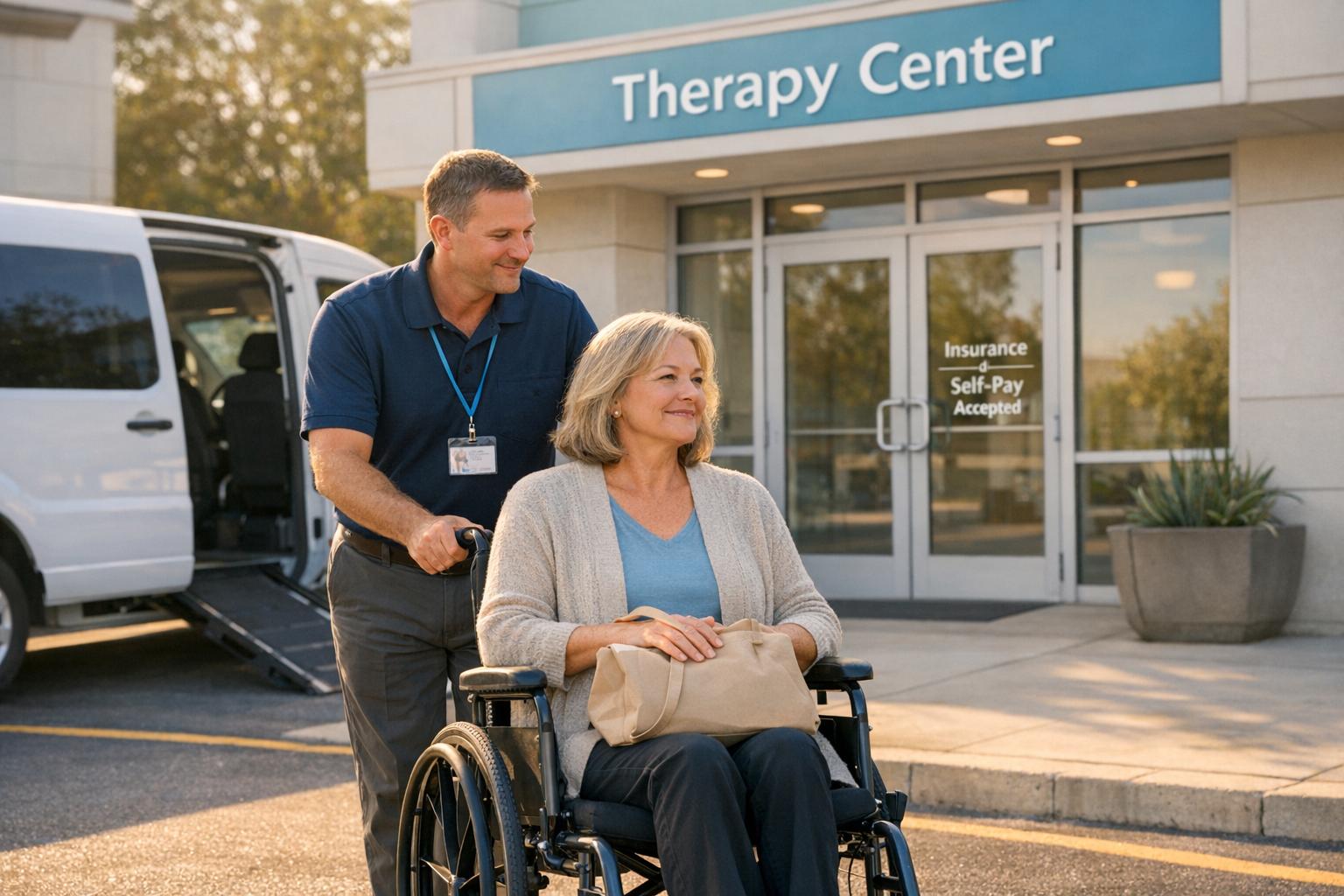
This service is often fully funded by Medicaid, MyCare Ohio plans, Medicare Advantage plans, or through the Area Agency on Aging as part of a waiver program. To check eligibility for covered rides, seniors can contact the Ohio Medicaid Hotline at 1-800-324-8680. This coverage is especially helpful for individuals on fixed incomes who require regular transportation for essential treatments like dialysis, radiation therapy, physical therapy, or pharmacy visits. By offering a regulated and safe transport option, NEMT ensures seniors can reliably access critical healthcare services.
NEMT Service Features
NEMT services come with features designed specifically for medical transport needs. Providers like ReliaWheels operate fleets customized for healthcare transportation. For instance, ReliaWheels manages 60 wheelchair-accessible vehicles that undergo annual inspections by the Ohio EMS board. The company employs a team of 10+ solely focused on medical transport.
Drivers undergo extensive training, including Passenger Assistance Training (ODA DRIVE), First Aid, CPR, and defensive driving certifications. They also pass multiple background checks, screenings, and physical exams, ensuring they are well-prepared to assist seniors, especially those with mobility challenges.
Another key benefit is the ability to schedule rides in advance or set up recurring trips, which is essential for patients undergoing ongoing treatments. NEMT providers also allow phone-based scheduling, addressing the challenges many seniors face with smartphone-based services. This convenience highlights the growing need for specialized medical transportation in Northeast Ohio.
How Rideshare Services Work for Seniors
Rideshare App Functionality
Platforms like Uber and Lyft rely on smartphone apps to provide on-demand or pre-scheduled rides. However, for seniors who may find technology daunting, there are alternatives. Services like Uber Health allow healthcare providers or caregivers to book rides on behalf of passengers - no app required. These systems also come with digital dashboards, making it easier for healthcare organizations to manage ride scheduling and integrate it with billing processes. For seniors needing immediate rides, a tech-savvy coordinator may need to step in and assist. While this tech-driven convenience is useful, it can also create barriers for seniors who face difficulties with smartphones or apps.
Rideshare Accessibility Challenges
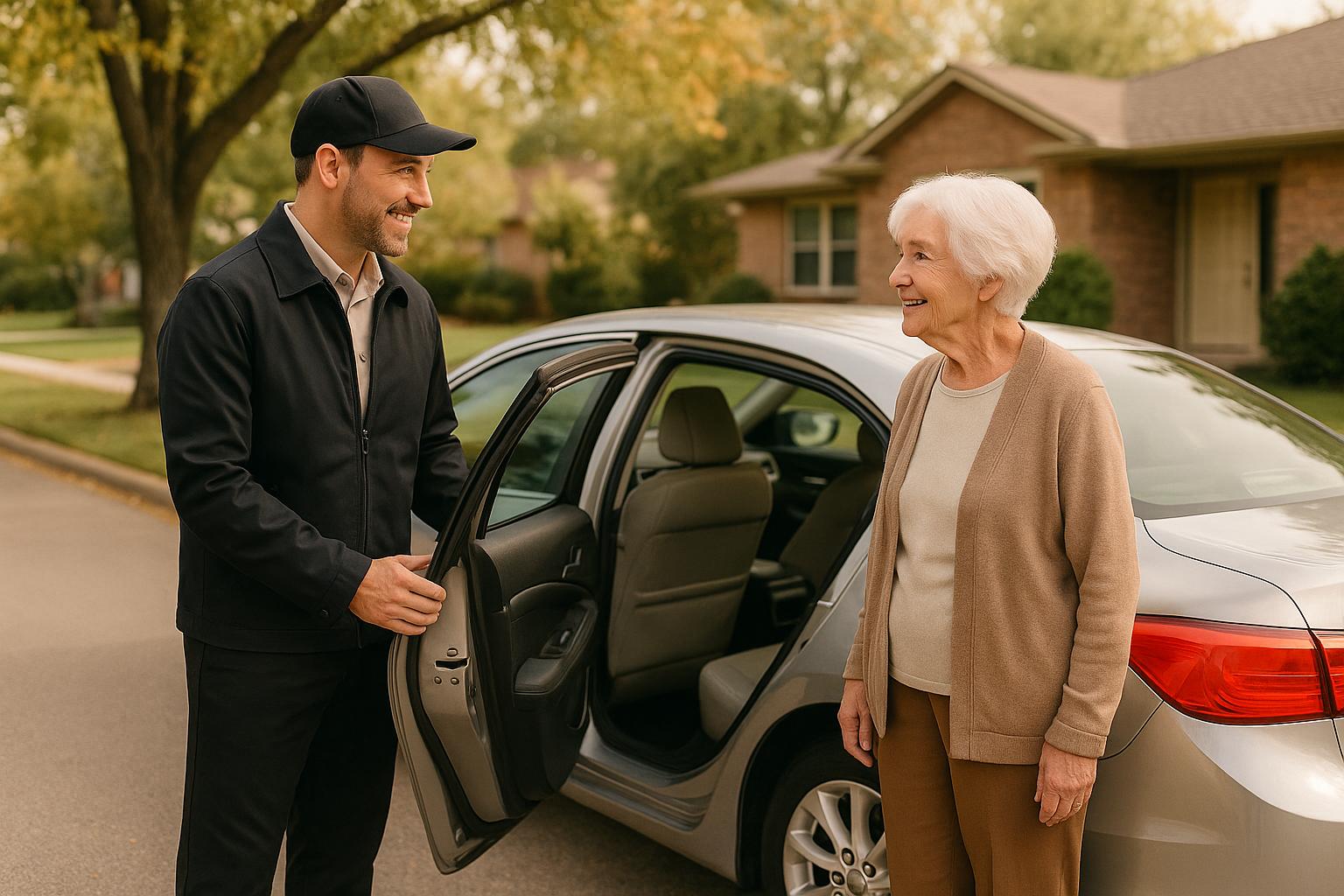
Rideshare services typically operate on a "curb-to-curb" basis. This means drivers pick up and drop off passengers at the curb but don’t assist with navigating to or from buildings or medical facilities. For seniors with mobility issues, cognitive impairments, or visual challenges, this can be a significant hurdle - especially if they struggle to locate the vehicle or reach the curb independently. Additionally, most rideshare vehicles are standard sedans, which are not equipped to handle wheelchairs or stretchers. This lack of accommodation makes it harder for seniors with serious mobility needs to use these services. The next section will explore how these service models address safety standards and driver requirements.
Safety Standards and Driver Requirements Compared
Safety Protocols and Regulations
In Ohio, NEMT services operate under strict supervision by agencies like ODM, DODD, and ODA. Drivers must complete a range of training programs, including CPR and First Aid certification from EMFTS-approved organizations. They also receive instruction in HIPAA compliance, patient handling, disability awareness, and emergency response. The table below highlights the differences between NEMT and rideshare services.
Rideshare platforms such as Uber and Lyft, on the other hand, function as app-based services, relying on personal vehicles driven by community members. While they do conduct background checks, the requirements for NEMT drivers are far more rigorous due to Medicaid certification standards. For instance, NEMT drivers are required to pass a 6-panel drug test, screening for substances like alcohol, amphetamines, THC, cocaine, opiates, and PCP. Rideshare companies may have drug testing policies, but these are not mandated by the state for medical transport purposes.
"Medical training is a large part of NEMT companies, and rideshare drivers simply don't have the necessary knowledge to help someone with medical needs." – TransMedCare
The vehicles used also highlight a key distinction. NEMT fleets undergo annual inspections by ASE-certified mechanics, with daily checks for safety features like wheelchair harnesses and hydraulic lifts. These vehicles are equipped with specialized tools such as wheelchair lifts, ramps, oxygen mounts, and first aid kits to meet ADA standards. In contrast, rideshare vehicles are typically personal sedans and often lack wheelchair accessibility, especially in areas outside major cities.
NEMT drivers must also meet additional qualifications, like holding a valid driver’s license for at least two years and obtaining specific endorsements for certain vehicle types. The table below provides a detailed comparison of the safety protocols and driver standards for NEMT and rideshare services.
Safety and Driver Standards Table
| Feature | NEMT (Ohio Standards) | Rideshare (Uber/Lyft) |
|---|---|---|
| Governing Body | ODM, DODD, ODA | Platform-regulated (Uber/Lyft) |
| Driver Training | CPR, First Aid, Patient Handling, HIPAA | General customer service; optional safety programs |
| Background Checks | Extensive; required for Medicaid certification | Annual checks; continuous monitoring |
| Drug Testing | Mandatory 6-panel drug & alcohol screen | Varies by company policy; not state-mandated |
| Driver License Requirement | Valid license for at least 2 years | Varies by platform and location |
| Vehicle Type | Fleet-owned, ADA-compliant vans/WAVs | Personal vehicles (mostly sedans) |
| Vehicle Inspections | Annual ASE-certified plus daily wheelchair lift checks | Periodic self-certification or basic inspection |
| Assistance Level | Door-through-door with transfer assistance | Curb-to-curb |
| Insurance | Commercial vehicle & general liability | Personal insurance with platform-provided coverage |
| Communication | Mandatory two-way radio or cellular | App-based communication only |
| On-Board Equipment | Oxygen mounts, first aid kits | Standard personal vehicle equipment |
Although Uber and Lyft report safety incident rates of 0.0003% and 0.0004% respectively for 2021–2022, the core difference lies in how prepared drivers are to handle medical needs and provide physical assistance. NEMT drivers are legally obligated to assist seniors with mobility challenges or cognitive impairments, ensuring safe transfers between their homes, vehicles, and destinations.
Cost Analysis: NEMT vs. Rideshare
NEMT Pricing Structure
Non-emergency medical transportation (NEMT) services generally cost between $13 and $46 per ride, depending on the distance traveled and any medical accommodations required. For many seniors who qualify, Medicaid, Medicare Advantage, or private insurance often covers the full cost of these trips, leaving no out-of-pocket expenses. For those who pay directly, companies like ReliaWheels offer competitive rates and even flexible payment options for recurring treatments, such as dialysis or physical therapy.
Specialized services, like wheelchair-accessible vehicles or stretcher transport, do come with higher fees compared to standard sedan rides. One of the standout perks of NEMT is that providers handle all the insurance paperwork, sparing seniors the hassle of filing for reimbursements.
Rideshare Pricing Structure
Rideshare services, like Uber and Lyft, use a dynamic pricing model, meaning fares can change based on demand. In Cleveland, for example, an average UberX trip costs between $16 and $20, but prices can jump significantly during surge periods. A study on rideshare-based medical transport found that the average trip cost was $24.66, with a range spanning from $9.99 to $54.49.
Unlike NEMT, rideshare services require upfront payment via a linked credit card, and traditional Medicare or Medicaid typically does not cover these fares. Additional fees, like cancellation charges or extended wait times, can also drive up the total cost.
Cost Comparison Table
| Feature | Traditional NEMT (e.g., ReliaWheels) | Rideshare (e.g., Uber/Lyft) |
|---|---|---|
| Primary Payer | Medicaid, Medicare Advantage, Private Insurance | Out-of-pocket payment |
| Typical Cost per Trip | $13–$46 (often $0 with insurance) | $10–$55 (subject to surge pricing) |
| Pricing Model | Fixed/contracted rates | Dynamic, on-demand pricing |
| Wait Time | Often included for short appointments | May incur additional per-minute fees |
| Specialized Transport | Wheelchair and stretcher options available | Limited to standard vehicles |
| Insurance Billing | Provider handles all paperwork | Payment upfront; reimbursement unlikely |
Rideshare-based NEMT platforms can reduce costs by 30% to 70% compared to traditional NEMT, potentially saving healthcare organizations around $268 per user annually. However, these savings are more likely to benefit healthcare providers, as they typically manage ride coordination, rather than being directly accessible to individual consumers.
sbb-itb-a0ce227
Door-Through-Door Care and Mobility Support
NEMT Door-Through-Door Assistance
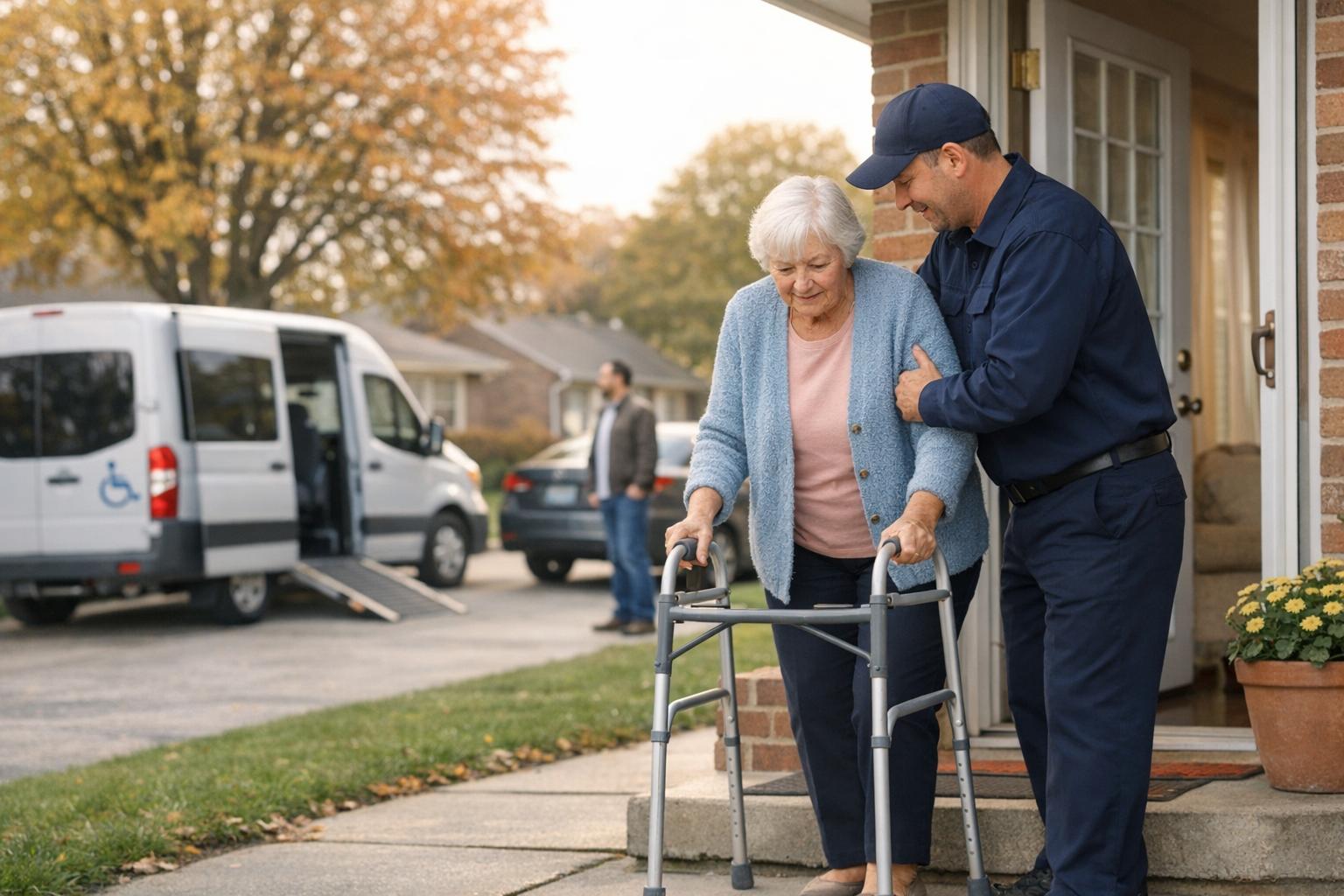
In Northeast Ohio, NEMT providers like ReliaWheels take a hands-on approach to supporting seniors from start to finish. Drivers don't just wait at the curb - they come right to the doorstep, assist seniors into the vehicle, and stay with them until they’ve safely reached their destination. This ensures that seniors never have to manage challenging transfers on their own.
"Our dedicated drivers will arrive at your doorstep, help you into the vehicle, and ensure a smooth journey to your destination and back." - ReliaWheels
ReliaWheels drivers undergo specialized training, including ODA DRIVE, CPR, and First Aid, to competently handle wheelchairs, mobility devices, and essential medical supplies. For seniors needing stretcher transport, ambulette vehicles are available to ensure safe and comfortable transfers from bed to vehicle. ReliaWheels has built a reputation for providing thorough and compassionate care. This level of service sets NEMT apart from regular transportation options.
Rideshare Service Limitations
Unlike NEMT services, standard rideshare options only offer curb-to-curb assistance. Drivers are not trained in medical care or handling passengers with specialized needs.
"Drivers are not trained in CPR, medical assistance, or specialized patient handling, as trips are intended for non-emergency passengers." - Uber Health
For seniors with mobility challenges, these limitations can create significant hurdles. Without help escorting passengers into buildings or offering physical support, rideshare services may not meet the needs of those requiring extra care.
Are ride-share giants like Uber and Lyft taking over the entire NEMT market?
Conclusion: Selecting the Right Transportation Option
Choosing between transportation options hinges on individual needs, especially when balancing safety, cost, and care. For seniors who require a wheelchair, stretcher, or help from their front door to the vehicle, Non-Emergency Medical Transportation (NEMT) is a dependable choice. Services like ReliaWheels offer drivers with specialized medical training, a feature typically absent in standard rideshare services.
While cost is an important factor, it’s not the only one to consider. For example, the average UberX ride in Cleveland costs about $20, but Medicaid often covers NEMT expenses for medical appointments. Seniors in Cleveland aged 60 and older can also use the Senior Transportation Connection for just $1.25 per one-way trip. Before booking, it’s wise to check with your insurance provider or call ReliaWheels at 440-468-6976 to confirm coverage details.
Rideshare services, on the other hand, work well for seniors who can get in and out of vehicles on their own and need transportation for non-medical purposes like errands or social visits. For tech-savvy seniors - or those with assistance in booking - rideshare offers a convenient, on-demand solution.
For recurring medical treatments such as dialysis or chemotherapy, NEMT stands out for its reliability and specialized care. ReliaWheels ensure safe hand-offs after procedures involving anesthesia.
Ultimately, the choice comes down to your priorities. If safety and door-to-door assistance are essential - especially for seniors with mobility challenges or chronic conditions - NEMT is the way to go. However, independent seniors comfortable with technology may find rideshare a practical option for everyday trips. For personalized advice, reach out to the Ohio Mobility Management Program to explore the best transportation solutions in your area.
FAQs
What are the key differences between NEMT and rideshare services for seniors in Northeast Ohio?
When comparing Non-Emergency Medical Transportation (NEMT) with rideshare services for seniors, the distinctions come down to purpose, safety, and assistance.
NEMT is specifically designed to cater to seniors and individuals with medical needs. Drivers are trained to assist passengers who face mobility challenges, and the vehicles are equipped with features like wheelchair ramps or lifts to ensure accessibility and safety.
On the other hand, rideshare services rely on personal vehicles, which often lack these accommodations. Most rideshare drivers are not trained to assist seniors or manage medical situations. For seniors who need additional care - like help entering and exiting the vehicle or assistance that goes beyond curbside service - NEMT provides a more dependable and supportive solution tailored to their specific needs.
What’s the difference in insurance coverage between NEMT and rideshare services for seniors?
Medicaid often includes coverage for Non-Emergency Medical Transportation (NEMT) to assist eligible individuals who lack other means of getting to medical appointments. This is especially helpful for people with disabilities or mobility issues. Medicaid-funded transportation can involve taxis, vans, or specially equipped vehicles. However, the specifics - like whether prior approval or a certification of need is required - depend on the rules set by each state.
When it comes to rideshare services like Uber or Lyft, Medicaid typically doesn’t cover them. Unless a state Medicaid program or managed care plan explicitly allows it, these services are usually an out-of-pocket expense. While a few pilot programs have experimented with including rideshare options, they’re not yet a common feature of Medicaid coverage.
Why should seniors consider NEMT instead of rideshare services for medical appointments?
Seniors often choose Non-Emergency Medical Transportation (NEMT) for medical appointments because it caters specifically to their needs. These services focus on safety, with trained drivers, well-maintained vehicles, and strict compliance with regulations. For seniors dealing with mobility issues or health concerns, NEMT offers door-through-door assistance, providing the extra help they might require.
Unlike rideshare services, NEMT is designed for reliability - perfect for scheduled medical visits, minimizing the chances of delays or missed appointments. Another advantage? Many NEMT providers accept Medicaid and other insurance plans, making it a more budget-friendly option for seniors living on fixed incomes. In short, NEMT delivers a safer, more dependable, and personalized transportation solution for elderly individuals who need consistent care and support.