Improving Non-Emergency Medical Transportation (NEMT) is critical for ensuring patients get to essential medical appointments like dialysis and therapy. However, coordination issues between healthcare providers and transportation services create delays and missed appointments, impacting patient outcomes. The fragmented funding structure - spanning 42 federal programs and $3 billion in Medicaid funding - further complicates operations.
Key challenges include:
- Outdated scheduling: Manual processes lead to long wait times (30 minutes to hours).
- Communication gaps: Disconnected systems cause miscommunication and scheduling conflicts.
- Compliance hurdles: Complex regulations and fragmented funding make documentation difficult.
Solutions focus on:
- Shared digital platforms: Simplify scheduling, track rides in real-time, and reduce costs (e.g., $114,000 saved in one case study).
- Joint notification protocols: Use GPS tracking and automated alerts to improve communication.
- Integrated data systems: Align records with Medicaid rules to ensure compliance.
Programs like ReliaWheels in Cleveland demonstrate how tailored services, trained drivers, and flexible scheduling can address these issues. By working together, providers and NEMT services can reduce missed appointments, improve patient access, and lower costs.
The Health and Cost Impacts of Transporting Patients to Their Appointments
Common Problems in NEMT Coordination
When providers and transporters fail to work together seamlessly, it disrupts timely patient care. Issues like scheduling mishaps, communication breakdowns, and compliance hurdles create significant obstacles, often leaving patients stranded and unable to make it to their appointments.
Poor Scheduling and Appointment Timing
One major culprit is outdated scheduling methods. Many systems still rely on manual processes, such as paper records and taxi vouchers, which make it nearly impossible to track driver locations, vehicle availability, or patient status effectively. The result? Patients are left waiting for anywhere from 30 minutes to several hours.
The problem becomes even worse with urgent, last-minute transportation needs. While recurring appointments are easier to plan, "just-in-time" rides - like those needed for hospital discharges - often fall victim to scheduling conflicts and delays. A study of a large health system revealed that 65% of NEMT rides were tied to hospital or emergency department discharges, making prompt coordination absolutely essential. Rural areas face even greater difficulties, as fewer vehicles are available to meet demand.
"NEMT causes suboptimal patient and staff experiences through complex advanced scheduling procedures, long waits and missed appointments." - BMJ Health & Care Informatics
These inefficiencies in scheduling also contribute to broader communication challenges within NEMT coordination.
Communication Gaps Between Providers and Transporters
Disconnected data systems are another major roadblock. In many cases, individual hospital departments manage rides independently, which prevents a unified view of transportation needs across the system. Social workers are often left juggling phone calls to brokers and sorting out ad hoc funding, leading to delays and miscommunication.
Regulatory restrictions add another layer of complexity. Federal and state guidelines strictly regulate who can use NEMT services, aiming to prevent fraud. While these rules are crucial, they create silos between different transportation programs, making it nearly impossible to coordinate resources efficiently. Information on available funding is scattered across multiple agencies, leaving healthcare providers struggling to navigate what’s available.
In 2020, BJC HealthCare tackled these issues by implementing a unified NEMT platform through Kaizen Health. Spearheaded by Peter G. Lyons and Thomas M. Maddox, the initiative replaced a fragmented system of taxi vouchers and manual scheduling. For "just-in-time" calls, wait times dropped to under 10 minutes, a significant improvement over the previous 30-minute to several-hour delays. Additionally, the program saved approximately $114,000 compared to 2019 taxi voucher expenses.
While improved scheduling and communication are critical, compliance and documentation issues remain a major challenge.
Compliance and Documentation Problems
Managing NEMT funding is no small feat, given that it comes from 42 different federal programs overseen by six separate departments. Each program has its own rules for eligibility, spending, and record-keeping, making standardization nearly impossible. For example, Medicaid alone spends $3 billion annually on NEMT, but the specifics of that funding vary widely by state.
"Requirements to serve only eligible individuals and ensuring proper controls are in place to prevent improper payments and fraud are among the challenges to coordination for these programs." - GAO
Fraud prevention measures, while necessary, add to the complexity. Healthcare organizations must maintain separate documentation for each funding source, and the lack of clear cost-sharing policies makes it difficult to allocate expenses accurately when multiple programs assist the same individual. This fragmented system leads to duplicated services, improper payments, and higher program costs, all while patients who rely on NEMT struggle to access critical medical care.
Solutions for Better NEMT Provider Partnerships
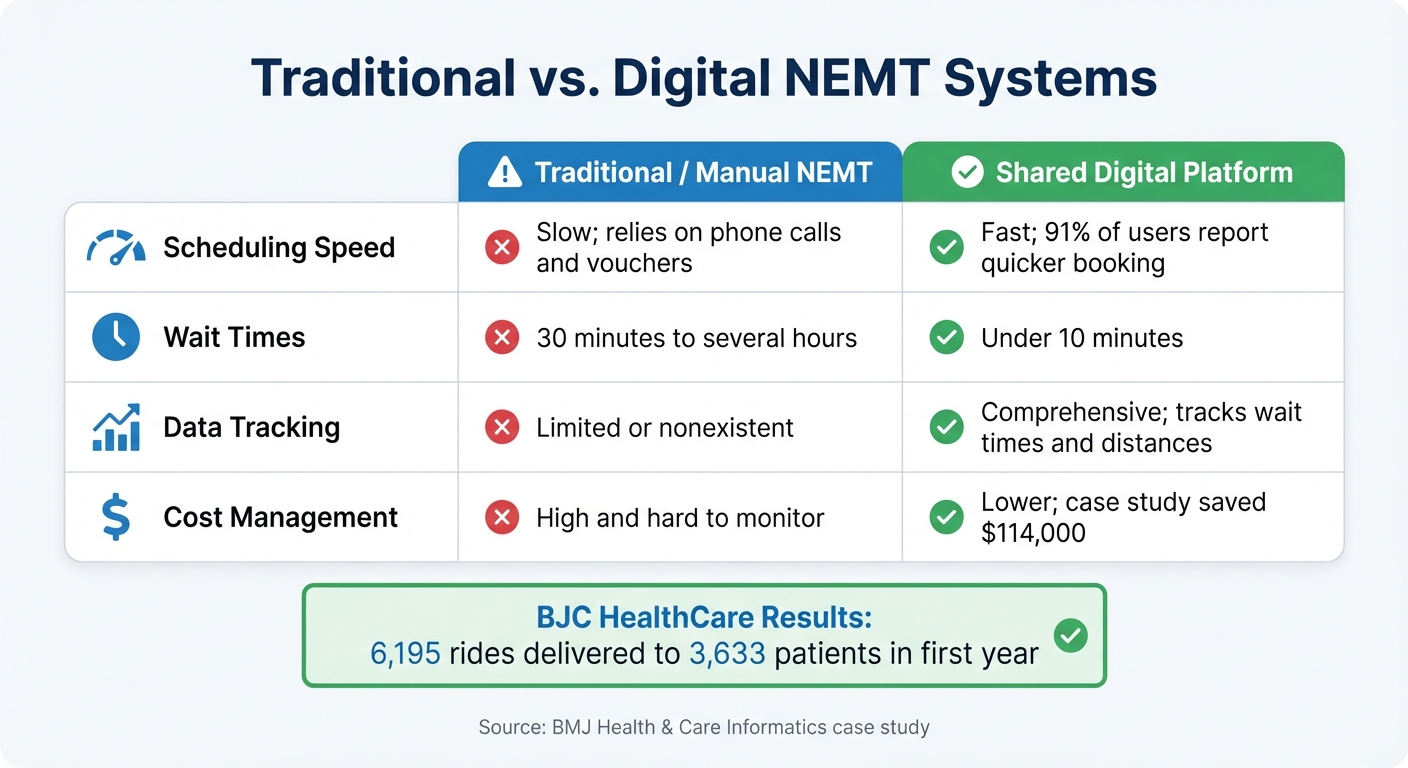
Traditional vs Digital NEMT Systems: Performance Comparison
Improving non-emergency medical transportation (NEMT) partnerships requires a focused approach. Healthcare organizations and transportation providers can streamline operations using three key strategies: shared digital platforms, joint notification protocols, and integrated data systems. These methods tackle common issues like scheduling delays, communication gaps, and regulatory hurdles, making NEMT operations run more smoothly.
Using Shared Digital Platforms
A centralized web portal can revolutionize how hospitals and transportation providers coordinate rides. With a single interface, hospital staff can contact brokers, check vehicle availability, and book rides - eliminating the need for multiple phone calls or outdated paper vouchers. Modern platforms combine rideshare options with specialized medical transport, ensuring that all patient needs are addressed efficiently.
The results speak for themselves. When BJC HealthCare adopted a unified platform in 2020, they saw dramatic improvements: urgent call wait times dropped to under 10 minutes, 91% of staff reported faster booking, and the system saved the organization about $114,000 compared to previous taxi voucher expenses.
Real-time tracking adds another layer of efficiency, offering visibility into driver locations and arrival times. This allows care teams to plan discharges more effectively and significantly reduces patient waiting periods.
| Feature | Manual/Traditional NEMT | Shared Digital Platforms |
|---|---|---|
| Scheduling Speed | Slow; relies on phone calls and vouchers | Fast; 91% of users report quicker booking |
| Wait Times | 30 minutes to several hours | Typically under 10 minutes |
| Data Tracking | Limited or nonexistent | Comprehensive; tracks wait times and distances |
| Cost Management | High and hard to monitor | Lower; one case study saved $114,000 |
Creating Joint Notification Protocols
Clear communication between NEMT providers, patients, and healthcare facilities is essential for smooth operations. GPS tracking systems play a critical role, offering real-time updates on vehicle locations and estimated arrival times to both patients and medical staff.
"Real-time communication capabilities enable swift coordination, quick decision-making, and immediate response to any unexpected situations or changes in plans." - Americ Transit Services
Effective protocols should include pre-trip verification to confirm appointment details and any special instructions from healthcare providers. For example, integrating Electronic Health Records (EHRs) into the process ensures drivers are aware of specific patient needs, such as oxygen tanks or specialized wheelchair restraints, before they arrive. Automated alerts for no-shows, cancellations, or vehicle breakdowns allow dispatchers to quickly notify facilities and arrange alternative transportation.
Automated reminders for appointments and pick-ups also help reduce no-shows, keeping patients engaged and on schedule. Additionally, building in extra time for patients who require mobility assistance or specialized equipment prevents delays from snowballing throughout the day. These notification systems lay the groundwork for better data integration, enhancing both compliance and operational transparency.
Connecting Data Integration Systems
Integrating patient data and transportation logs across systems is crucial for accurate record-keeping and regulatory compliance. With Medicaid allocating approximately $3 billion annually to NEMT services, maintaining thorough documentation is vital for program integrity and fraud prevention.
Integrated systems help NEMT providers align with Medicaid eligibility and medical necessity requirements, which vary by state. To assist with this, the Centers for Medicare and Medicaid Services (CMS) offers a dedicated NEMT Toolkit, complete with educational videos and a "Non-Emergency Medical Transportation Booklet for Providers." These resources outline the essential data points needed for federal compliance.
sbb-itb-a0ce227
The ReliaWheels Model for NEMT Coordination
ReliaWheels simplifies Non-Emergency Medical Transportation (NEMT) coordination for healthcare providers across Greater Cleveland. By focusing on key medical hubs like Cleveland Clinic, University Hospitals, and MetroHealth, this service ensures that drivers meet each facility's logistical needs. These efforts directly address the challenges of scheduling, communication, and compliance previously outlined.
Tailored Transportation Services
ReliaWheels goes beyond typical rideshare options by offering transportation solutions designed specifically for medical needs. Their fleet includes ADA-compliant vans with hydraulic lifts for wheelchair users, vehicles equipped for stretcher and gurney transport, and bariatric-capable vehicles for patients needing extra support. The service provides door-to-door assistance, helping patients from their beds or homes directly into medical facilities. Additional features include integrating pharmacy stops into return trips and offering complimentary wait-and-return service for appointments lasting less than two hours. To further accommodate patients, one companion or caregiver can ride along at no extra cost.
Highly Trained Drivers and Staff
ReliaWheels drivers bring more than just transportation expertise - they are extensively trained to ensure patient safety and comfort. Every driver is certified in CPR, First Aid, Defensive Driving, HIPAA compliance, and PASS (Passenger Assistance Safety and Sensitivity). They also receive training in conflict resolution and wheelchair handling, offering hands-on assistance during transfers. For stretcher-bound patients, drivers are skilled in safely transitioning individuals between beds and stretchers, ensuring stability throughout the journey.
"Cleveland's unpredictable weather makes specialized NEMT vital. ReliaWheels drivers are trained to navigate Ohio winters while keeping patients warm and safe during the transfer." - NEMT Entrepreneur Resources
Flexible Scheduling and Coverage
ReliaWheels accommodates a range of appointments, from urgent needs to recurring visits like dialysis, physical therapy, and adult daycare. While primarily serving the Cleveland Metro area, the service also covers Akron and nearby suburbs such as Lakewood, Rocky River, Westlake, Parma, and Cleveland Heights. Drivers arrive 10 to 15 minutes early to ensure timely pickups. For patients needing long-distance medical transport - whether crossing state lines or traveling to specialized centers - ReliaWheels provides extended trip options, maintaining consistent care throughout the journey.
Benefits of Healthcare-Provider Partnerships in NEMT
Better Patient Access and Reliability
Collaborations between healthcare providers and Non-Emergency Medical Transportation (NEMT) services significantly cut down on missed appointments. Pilot programs reveal that integrating transportation services can increase appointment attendance rates by over 10% and reduce hospital readmissions.
These partnerships play a crucial role in connecting patients with follow-up care after hospital discharge, which lowers the chances of 30-day readmissions. With digital platforms enabling direct scheduling, the need for time-consuming manual processes is eliminated. This ensures patients make it to essential preventative screenings and early diagnostic appointments, reducing the likelihood of costly emergency treatments down the line.
By improving transportation efficiency, these partnerships not only enhance patient care but also deliver measurable financial benefits to providers.
Efficiency and Cost Savings
Healthcare providers can save a significant amount of money by partnering with coordinated NEMT services. Missed appointments cost providers approximately $200 per no-show, and these losses can quickly add up in larger facilities. By adopting unified NEMT solutions, providers can lower costs per trip and reduce wait times to under 10 minutes through streamlined digital scheduling.
| Metric | Traditional System | Integrated Partnership |
|---|---|---|
| Wait Times | 30 minutes to several hours | Under 10 minutes |
| Cost per Trip | ~$28.00 | ~$8.10 (rideshare-based) |
Efficiency gains extend beyond transportation costs. About 91% of staff report faster scheduling, and 77% find the platform easier to navigate. This allows social workers and care managers to dedicate more time to clinical tasks instead of coordinating rides.
Improved Compliance and Record Management
Beyond improving efficiency, these partnerships help ensure compliance with regulatory standards. Integrated digital platforms simplify adherence to state-specific Medicaid rules and Centers for Medicare and Medicaid Services (CMS) guidelines. With Medicaid spending around $3 billion annually on NEMT services, maintaining regulatory alignment is essential for both providers and transportation services. Centralized scheduling systems streamline compliance and consolidate data to meet state and federal requirements.
Federal programs like the Pilot Program for Innovative Coordinated Access and Mobility (ICAM), funded through fiscal year 2026, further support the integration of transportation and health records to boost service reliability. By sharing digital platforms, healthcare providers and NEMT services can track performance against regulatory goals and improve health outcomes through detailed evaluation plans. This coordination is particularly vital since NEMT policies vary widely across states, making local partnerships indispensable for navigating regional regulations.
Conclusion
Challenges in coordinating healthcare providers with non-emergency medical transportation (NEMT) services can significantly disrupt patient care. However, when these groups work together effectively - leveraging digital tools and streamlined protocols - the results are impressive. For instance, the US Veterans Health Administration reduced missed appointments by 83% over two years by adopting a coordinated NEMT platform. Similarly, OneWell Health Care achieved monthly savings of $407 per participant through integrated technology. These examples highlight how collaboration can transform healthcare delivery at both national and local levels.
In Cleveland, such partnerships are making a direct impact. By ensuring that even underserved communities have access to consistent and specialized care, organizations like ReliaWheels are setting a strong example of what coordinated efforts can achieve.
Integrated systems that schedule recurring rides for patients undergoing treatments like dialysis or chemotherapy are another game-changer. These systems not only enhance treatment adherence but also reduce administrative workloads by 50%. The dual benefit of improving patient outcomes while cutting costs makes a compelling case for widespread adoption.
Ultimately, local partnerships are essential to maintaining these advancements. As discussed throughout this article, these strategies are critical for improving the reliability and efficiency of NEMT services. In Cleveland, this means teaming up with providers who understand Ohio's Medicaid policies while delivering dependable transportation that ensures patients stay connected to their care teams.
FAQs
How do digital platforms make scheduling NEMT services easier?
Digital platforms are making non-emergency medical transportation (NEMT) scheduling easier by bringing all ride-related details into one centralized system. With this setup, patients, providers, dispatchers, and drivers can access real-time updates, which helps reduce mistakes and improves overall communication.
Some standout features include AI-powered scheduling, which aligns appointments with the best routes and vehicles. This helps avoid overbooking and keeps delays to a minimum. Real-time GPS tracking allows dispatchers to keep tabs on driver locations, make route adjustments, and reassign rides as needed, cutting down on wait times and missed appointments. Automated notifications - like text messages or emails - ensure everyone stays informed with the latest updates, boosting both reliability and patient satisfaction.
For those in the Cleveland area, services like ReliaWheels utilize these tools to provide seamless door-to-door transportation. Whether it’s for regular medical visits or specialized needs like wheelchair-accessible or stretcher-level rides, these platforms ensure timely and efficient service.
What are the main compliance challenges faced by NEMT providers?
Non-emergency medical transportation (NEMT) providers often navigate a maze of compliance challenges, largely due to the patchwork of state Medicaid regulations. Each state has its own set of rules, reporting protocols, and waiver provisions, which means providers must consistently stay informed and adjust their operations to meet these specific requirements. On top of that, meticulous record-keeping is essential, as is the need to promptly address any shortcomings to remain in good standing.
Fraud prevention and eligibility checks introduce another layer of difficulty. Providers must actively work to prevent misuse, ensure that all employees and contractors are eligible to participate in federal healthcare programs, and keep detailed documentation for every trip. This is particularly important for audits. To complicate matters further, federal legislation like the Consolidated Appropriations Act of 2021 has introduced new Medicaid coverage requirements, pushing providers to adapt to these evolving standards.
ReliaWheels | NEMT for Cleveland Ohio meets these challenges head-on by strictly adhering to state Medicaid regulations, maintaining precise records, and employing robust fraud prevention strategies. Their commitment ensures patients receive safe, reliable, and fully compliant transportation services.
What are the benefits of collaborating with healthcare providers for NEMT services?
Collaborating with healthcare providers can make communication and scheduling much more efficient, ensuring patients have a reliable way to get to their appointments on time. This teamwork helps cut down on missed appointments, boosts adherence to treatment plans, and improves how patients feel about the transportation services they use.
On top of that, improved coordination can help reduce operating costs by optimizing routes and avoiding unnecessary trips. For patients, especially those with mobility issues or specific care requirements, this translates to a smoother and more dependable experience.