---
title: Top 7 Features of Long-Distance Stretcher Vehicles
description: "Seven essential features for safe, comfortable long-distance stretcher transport: secure mounts, loading lifts, interior comfort, medical gear, ADA access, navigation, and bariatric options."
image: https://assets.seobotai.com/cdn-cgi/image/quality=75,w=1536,h=1024/reliawheels.com/693379f1df12e5e3fea0d8a3-1764993098535.jpg
---
- [NEMT](https://reliawheels.com/reliawheels-insights/tag/nemt)
# Top 7 Features of Long-Distance Stretcher Vehicles
- December 6, 2025

[Nik S.](https://reliawheels.com/reliawheels-insights/author/nik-s)
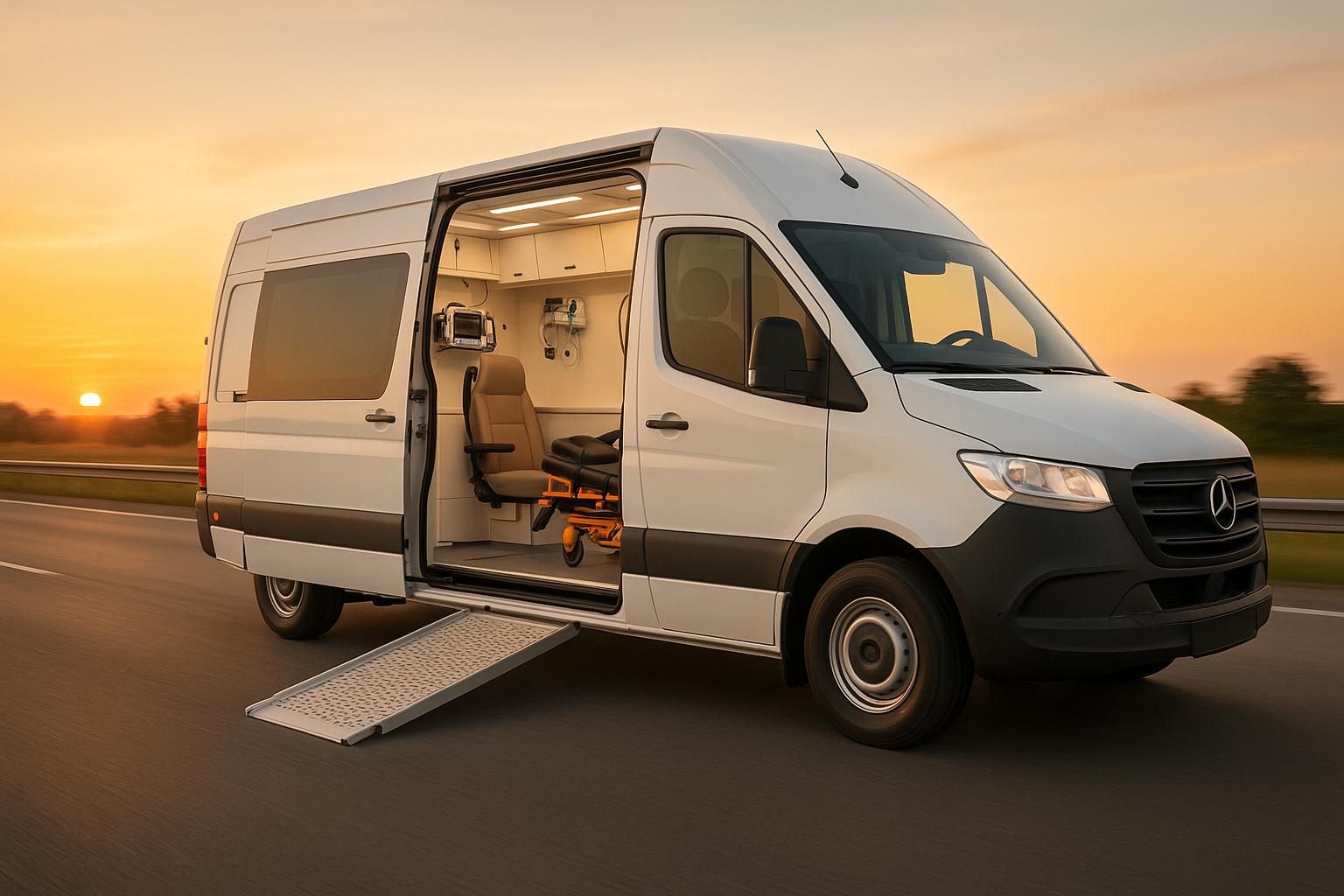
When patients need to travel lying down over long distances, long-distance stretcher vehicles provide a safe, non-emergency alternative to traditional ambulances. These vehicles are specially equipped for comfort, safety, and accessibility, making them ideal for hospital transfers, specialist visits, or rehabilitation trips. Key features include:
- **Secure Stretcher Mounting:** Heavy-duty systems ensure patient safety during sudden stops or sharp turns.
- **Loading Ramps & Lifts:** Hydraulic and mechanical systems simplify patient transfers and reduce caregiver strain.
- **Patient Comfort:** Climate control, shock-absorbing stretchers, and noise reduction ensure a smooth, restful journey.
- **Onboard Medical Equipment:** Oxygen mounts, IV holders, and monitoring devices keep patients stable throughout the trip.
- **[ADA](https://en.wikipedia.org/wiki/Americans_with_Disabilities_Act_of_1990)-Compliant Design:** Wide doors, non-slip flooring, and accessible layouts accommodate all mobility needs.
- **Navigation & Communication Systems:** GPS, real-time updates, and telematics improve efficiency and reliability.
- **Bariatric & Complex Needs Configurations:** Reinforced stretchers and layouts cater to heavier patients or those requiring advanced care.
These vehicles are an affordable, practical solution for non-emergency medical transport, offering safety and comfort tailored to patient needs.
## Stretcher Accessible Vehicle - Walk Around | [Freedom Motors](https://www.freedommotors.com/versatile-stretcher-vans-now-for-sale/)

## 1. Secure Stretcher Mounting and Safety Restraints
The heart of any long-distance stretcher vehicle lies in its ability to keep the patient securely in place throughout the journey. Whether the vehicle is speeding up on a highway, braking suddenly, or navigating sharp turns, an improperly mounted or unsecured stretcher can pose serious risks. Secure mounting systems paired with well-designed restraints work together to prevent these hazards while still giving caregivers full access to the patient during transit.
### Safety and Stability
Modern stretcher mounting systems are built for reliability, often using heavy-duty floor rails or antler brackets crafted from reinforced steel or aluminum. These systems feature a locking mechanism that secures the stretcher’s front wheels or frame into place. The antler-and-rail design provides both visual and audible confirmation when the stretcher is properly locked in, ensuring it’s secure before the journey begins.
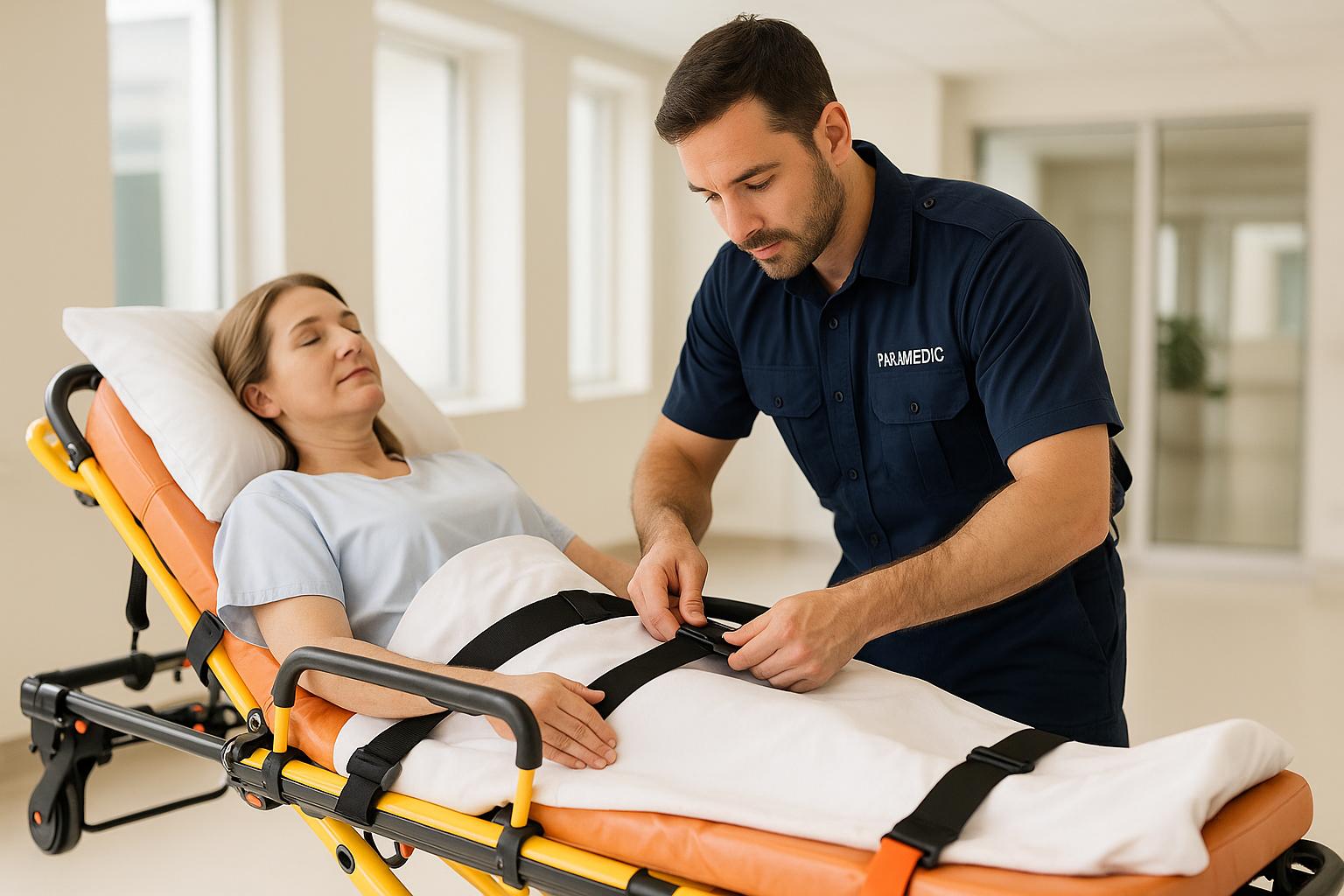
Once mounted, multi-point restraints take over to keep the patient safe. Typically, three- to five-point harnesses secure the patient across critical areas like the chest, pelvis, and legs. These belts connect directly to the stretcher frame, preventing dangerous movements such as sliding or rolling during sudden stops or sharp turns. This setup helps protect patients from secondary injuries, like fractures or head trauma.
Other safety features include anti-skid wheels and central brakes, which stabilize the stretcher during loading and transit. Ambulance specifications often require a vehicle loading height of about 26 inches and a load capacity around 350 pounds to ensure proper alignment with the vehicle’s floor. In the U.S., commercial non-emergency medical transport (NEMT) stretcher vans use hardware rated for loads up to 800 pounds, designed to endure the demands of long-distance use.
To further enhance safety, features like shock-absorbing frame elements and low centers of gravity reduce vibrations and wear over extended trips. These systems not only mitigate risks but also contribute to a smoother, more comfortable ride for the patient.
### Patient Comfort
Beyond safety, secure mounting systems also play a big role in patient comfort. By minimizing vibrations, shaking, and rattling, they help prevent discomfort, nausea, and dizziness - issues that can be particularly challenging for patients with fractures, spinal conditions, or post-surgical wounds. Shock-absorbing features ensure a smoother ride, reducing strain on the patient.
Many stretchers now come equipped with thick foam or pressure-relieving mattresses, adjustable backrests, and hydraulic frames. These features help patients relax, maintain stable vital signs, and arrive at their destination feeling less fatigued.
Hydraulic or powered height-adjustable frames add another layer of comfort and safety. They allow for bed-level transfers, reducing strain on caregivers and preventing abrupt jolts during loading or unloading.
### Accessibility Features
For patients with limited mobility, modern mounting systems include features like fold-down rails, adjustable heights, and sliding platforms. These make it easier to transfer patients from beds, wheelchairs, or other furniture, reducing the physical strain on caregivers and ensuring safer moves.
Some vehicles also integrate powered loading devices and adjustable working heights, enabling staff to transfer and secure patients with minimal lifting. Importantly, these designs ensure that restraint belts and rails don’t interfere with critical medical equipment like IV lines, oxygen tubing, or monitors.
Another advantage is flexibility. Many stretcher vans are designed to adapt their securement systems, allowing the same floor setup to accommodate a stretcher for one trip and multiple wheelchairs for another. This versatility improves fleet efficiency without sacrificing safety.
### Reliability and Maintenance
To ensure consistent safety and comfort, regular maintenance of these systems is essential. Operators should routinely inspect for loose bolts, worn locking mechanisms, bent rails, frayed belts, and malfunctioning buckles. Cleaning is equally important to prevent corrosion caused by disinfectants or bodily fluids. Proactive inspections and timely replacements help avoid failures and keep systems compliant with safety standards.
In the U.S., NEMT stretcher vans must have securement systems that integrate seamlessly with the vehicle’s interior layout. This ensures caregivers can access both sides of the patient for monitoring while keeping aisles clear for emergencies.
[ReliaWheels](https://reliawheels.com/) equips its long-distance stretcher vehicles with bariatric-capable antler-and-rail mounts and multi-point restraints. Whether transporting patients to hospitals, dialysis centers, nursing homes, or airports, these systems are designed to handle the demands of extended journeys while keeping patients stable and comfortable, even on unpredictable highway conditions.
## 2. Loading Ramps and Lift Systems
When it comes to patient transport, ensuring a safe and smooth transfer is just as important as the journey itself. Loading ramps and lift systems bridge the gap between stationary care and mobile transport, playing a crucial role in safety and efficiency. For long-distance trips, where patients may already feel fatigued or anxious, a seamless loading process can set a reassuring tone for the entire experience.
### Safety and Stability
The loading phase is one of the most sensitive moments in stretcher transport. A poorly designed ramp or lift can lead to accidents, equipment damage, or even patient injuries. Modern systems are designed to address these risks with advanced safety features.
**Hydraulic lift systems** are a game-changer, offering precise height adjustments to ensure level, secure transfers. This eliminates steep angles or awkward positions that could cause the stretcher to shift unexpectedly. For example, [Stryker](https://www.stryker.com/us/en/index.html)’s Power-PRO system uses hydraulic and electric power assist to raise and lower stretchers effortlessly, reducing caregiver strain. The Performance-LOAD system takes it a step further by automatically locking the stretcher in place on a guided platform while simultaneously charging its battery when loaded into the vehicle. These features make patient transfers smoother and safer.
**Mechanical ramp systems** provide a simpler but effective solution. In non-emergency medical transport (NEMT) vans, antler and rail securement systems make loading straightforward. The stretcher’s front wheels fit into an antler fixture, and a rail locks everything securely in place. Anti-slip surfaces and locking wheels further enhance safety during the critical transfer phase. Additionally, modern stretchers often include retractable fifth-wheel steering for better mobility and central-locking brakes for maximum stability once positioned.
### Patient Comfort
Beyond safety, patient comfort is a top priority during loading. Hydraulic systems excel in creating **bed-level transfers**, where the loading platform matches the height of a hospital bed. This smooth, horizontal transition minimizes jostling, reducing the risk of nausea or disorientation.
Integrated **shock absorbers** further enhance comfort by softening the impact during transfers. For instance, the [Ferno](https://ferno.com/ems/patient-handling/ambulance-cots?hl=en-us) 35-A Mobile Transport X-Frame Ambulance Cot features a lightweight aluminum frame with shock-absorbing capabilities and an adjustable backrest. With a load capacity of up to 500 pounds, it’s designed for both ease of use and patient comfort. For patients with complex medical needs, these systems can accommodate additional equipment such as IV poles, oxygen tanks, and monitoring devices. Many hydraulic frames also offer four-sided access, allowing caregivers to assist patients from any angle during transfers.
### Accessibility Features
Loading systems must adapt to various conditions and patient needs. Height-adjustable platforms are crucial for ADA compliance, enabling safe transfers without excessive manual lifting or awkward positioning.
Standard stretchers typically handle weights between 500 and 750 pounds, which covers most patients. However, bariatric patients require specialized equipment. Bariatric stretchers are built to support 600 pounds or more, with some models exceeding 1,000 pounds. These stretchers rely on reinforced hydraulic systems and securement rails to manage the additional weight safely.
Flexibility is another important feature of modern loading systems. Many NEMT vans can be reconfigured based on daily needs. For example, a van transporting a stretcher patient one day can be adjusted to carry two wheelchair passengers and five ambulatory passengers the next. This adaptability is made possible by removable antler and rail systems that don’t require permanent modifications. Additionally, loading platforms must provide enough space for patients transferring from wheelchairs or beds. Standard stretcher dimensions are about 80 to 83 inches long and 23 to 24 inches wide, with maximum load heights of 36 inches.
### Reliability and Adaptability
For long-distance transport, equipment must remain reliable over extended periods. Aluminum frames, like those in the Ferno 35-A, balance strength and maneuverability while resisting corrosion from frequent cleaning and disinfecting.
Routine maintenance, including checks on hydraulic fluid, locking mechanisms, and structural integrity, is essential for ensuring reliability. Modern stretchers often include smart weight sensors to assist with safe lifting protocols. Electric height-adjustable systems are becoming more common, offering precise adjustments and reducing the manual effort required by traditional hydraulic systems.
For providers like [ReliaWheels | NEMT for Cleveland Ohio](https://reliawheels.com), dependable loading systems are vital for serving patients who need stretcher transport for medical appointments, dialysis, nursing home transfers, or long-distance trips. Whether the journey is local or across state lines, the ability to load patients safely and efficiently ensures that care begins the moment the transport team arrives. Strong and secure loading systems, combined with reliable mounting features, complete the design of vehicles built for long-distance stretcher transport.
## 3. Patient Comfort and Interior Environment
Once patients are securely loaded, the interior environment plays a key role in ensuring their comfort, emotional well-being, and medical stability throughout the trip.
### Patient Comfort
The design of the interior focuses on easing discomfort and promoting rest. High-density foam mattresses, about 4 inches thick, help redistribute pressure and reduce soreness. These mattresses come with waterproof, easy-to-clean covers that meet infection control standards, making them suitable for patients with chronic pain or those recovering from surgery.
Adjustable backrests and leg supports allow patients to sit partially upright or elevate their legs, providing relief for those with cardiopulmonary issues or lower-back pain. This flexibility ensures that patients can remain comfortable for extended periods without the need for frequent repositioning.
Climate control systems maintain a stable cabin temperature of around 70°F, regardless of the weather outside. Proper ventilation keeps the air fresh and minimizes odors, reducing the risk of nausea. Noise reduction features, such as insulated panels and fine-tuned suspension, help minimize road noise and vibrations. Adjustable interior lighting provides soft ambient light for resting while ensuring caregivers have enough illumination to perform checks when necessary.
These thoughtful comfort features are seamlessly integrated with the vehicle’s advanced safety systems, creating a unified and patient-centered design.
### Safety and Stability
In addition to comfort, the vehicle is designed to ensure stability and safety during travel. Many models are equipped with large, omni-directional casters that simplify moving patients on and off the stretcher while maintaining stability.
The interior layout is carefully planned to enhance safety. Clear walkways around the stretcher enable caregivers to move freely, while anti-slip flooring and strategically placed grab handles help prevent accidents. Adjustable safety straps secure the stretcher without causing discomfort, and unobstructed sightlines between the driver and patient compartment allow for quick responses if the patient’s condition changes.
### Accessibility Features
Wide side and rear doors make it easier to maneuver stretchers, which is especially helpful for patients recovering from surgery or dealing with severe pain. Additional secured seating is available for caregivers, ensuring they can remain close to the patient. Integrated storage compartments keep essential items like oxygen bottles, IV supplies, and monitors securely in place.
With the secure loading process already addressed earlier, these accessibility features further enhance the level of care provided during long trips.
### Reliability and Adaptability
Long-distance transportation requires equipment that is both reliable and versatile. Medical-grade materials, such as sealed vinyl upholstery and non-porous surfaces, ensure the vehicle remains hygienic between trips. Adjustable head and knee supports, along with extra padding, help alleviate pressure points, making the journey more comfortable for patients with chronic pain. For those with respiratory conditions, semi-Fowler’s positioning and easy access to oxygen mounts provide additional relief.
Specialized configurations cater to bariatric patients, with stretchers designed to handle higher weight capacities - often rated for 600 pounds or more, with some exceeding 1,000 pounds. These stretchers are paired with wider mattresses and safety belts that evenly distribute pressure. The extra space around the stretcher allows caregivers to reposition and assist patients safely.
For providers like [ReliaWheels | NEMT for Cleveland Ohio](https://reliawheels.com), who offer door-to-door stretcher transport for medical appointments, dialysis, nursing home transfers, and long-distance trips, these features are essential. By equipping vehicles with climate-controlled compartments, high-quality mattresses, and adjustable positioning systems, and by training staff to provide gentle, attentive care, the overall patient experience during extended journeys is greatly improved.
## 4. Onboard Medical Support and Monitoring Equipment
When it comes to long-distance patient transport, onboard medical support isn't just a luxury - it's a necessity. Ensuring patients receive continuous care during their journey requires vehicles equipped with secure, reliable medical equipment. From stabilizing devices to patient comfort features, every detail matters.
### Safety and Stability
Imagine the chaos if medical equipment shifted or toppled during a sharp turn or sudden stop. To prevent such risks, stretcher vehicles are outfitted with secure mounts for oxygen cylinders, monitors, and defibrillators. These mounts keep everything firmly in place, maintaining safety for both patients and caregivers.
Stretcher systems use integrated antler-and-rail mechanisms to lock securely during transit. Central-locking brake systems further ensure the stretcher stays put when caregivers need to make adjustments or reposition the patient. This stability not only prevents accidents but also allows uninterrupted medical care, which is crucial for patient well-being.
Most standard transport stretchers come with built-in features like oxygen-bottle storage and multiple IV receptacles. By eliminating the need for freestanding IV poles or loose oxygen tanks, these designs ensure that oxygen therapy and IV lines remain stable, even during movement. This thoughtful integration minimizes risks and keeps the cabin organized and safe for everyone onboard.
### Patient Comfort
Medical equipment isn't just about function - it plays a big role in keeping patients comfortable, especially on long trips. Adjustable stretchers, for instance, allow caregivers to position patients for optimal comfort without disrupting their care. Whether it's adjusting for respiratory support or fluid management, these small changes make a big difference.
Positions like Trendelenburg and Fowler are particularly helpful. They improve circulation, ease breathing, and provide relief for patients with cardiopulmonary issues. High-end power cots, such as those from Stryker and Ferno, can even support up to 700 pounds, offering powered lift and height adjustments. This eliminates the need for manual lifting, reducing strain on caregivers and ensuring patients are positioned properly and comfortably.
### Accessibility Features
Caregivers need easy access to medical equipment, especially during long-distance trips. Built-in IV poles and multiple receptacles allow for secure placement of fluids or medications without relying on freestanding poles that could tip over. This setup is particularly important for patients requiring continuous medication infusions or hydration during transfers to dialysis centers, nursing homes, or specialized treatment facilities.
Some stretcher vans are designed with modular interiors that can adapt to different patient needs. These interiors include strategically placed equipment mounts and clear walkways, allowing caregivers to reach devices quickly from their seats. Storage compartments keep backup supplies and extra oxygen bottles organized, ensuring everything is within arm’s reach. This thoughtful layout improves both accessibility and efficiency during transport.
### Reliability and Adaptability
When transporting patients over long distances, reliability is non-negotiable. Integrated electric systems ensure stretchers stay locked and device batteries remain charged throughout the journey, so critical equipment functions without interruption.
Providers like [ReliaWheels | NEMT for Cleveland Ohio](https://reliawheels.com), who handle long-distance trips for medical appointments, dialysis, and nursing home transfers, rely on this level of dependability. Patients traveling from Cleveland to other cities for specialized care need the confidence that their oxygen supply, monitoring devices, and powered stretchers will perform flawlessly from start to finish.
To maintain this reliability, equipment must meet federal safety standards set by the [FMCSA](https://www.fmcsa.dot.gov/). Regular maintenance is key - checking oxygen cylinder pressures, testing battery backups, and inspecting mounting brackets are just a few of the routine tasks that keep systems running smoothly. Additionally, staff training and scenario-based drills prepare caregivers to respond swiftly if a patient's condition changes during transport. These practices ensure both safety and peace of mind for everyone involved.
###### sbb-itb-a0ce227
## 5. [ADA](https://en.wikipedia.org/wiki/Americans_with_Disabilities_Act_of_1990)-Compliant Design and Accessibility
Beyond offering advanced safety and comfort features, long-distance stretcher vehicles must adhere to strict ADA standards to provide inclusive and effective transportation for all patients.
### Accessibility Features
ADA compliance ensures that patients with mobility challenges can access transportation that is both safe and dignified. In the United States, vehicles must meet Department of Justice and Department of Transportation regulations, which address how individuals with disabilities can enter, exit, and travel safely.
Key design elements include doors and aisles wide enough to accommodate wheelchairs and stretchers, along with sufficient floor space around securement areas. Flooring must be stable and non-slip to prevent shifting during loading or transit. Ramps and lift systems are required to meet specific ADA guidelines, such as proper slope angles, handrails, and slip-resistant surfaces to ensure safety in all weather conditions. Vehicles often feature side and rear entry options, offering flexibility for different pickup locations, whether it’s a residential driveway or a medical facility’s loading dock. Full-size vans are particularly suited for stretcher transport due to their spacious interiors and ability to meet safety requirements. These accessibility features integrate seamlessly with the overall safety systems of the vehicle.
### Safety and Stability
Safety is a cornerstone of ADA-compliant vehicle design. Certified stretcher securement systems must meet both safety and ADA standards, ensuring secure anchoring to reinforced, level flooring. Clearly marked attachment points prevent the stretcher from shifting or tipping during starts, stops, or sharp turns - movements that are especially pronounced during long highway trips. These systems must also accommodate weight capacities ranging from 350 to 500 pounds for standard stretchers, with higher capacities available for bariatric equipment.
Accessibility controls, such as lifts, ramps, lighting, climate systems, and call buttons, must be easy to operate for riders with limited mobility. Clear visual and tactile indicators provide reassurance to both patients and caregivers, reducing risks during loading and unloading.
### Reliability and Adaptability
Modern ADA-compliant stretcher vehicles are designed with multi-purpose interiors, allowing them to meet a variety of patient needs without sacrificing compliance. This adaptability is essential for providers like [ReliaWheels | NEMT for Cleveland Ohio](https://reliawheels.com), who manage diverse transportation requirements. Whether transporting a stretcher-bound patient or offering wheelchair-accessible rides for dialysis appointments, these vehicles can be reconfigured to suit the situation. By switching between stretcher, wheelchair, and ambulatory setups, providers can optimize their fleet, reducing costs while ensuring every patient receives proper accommodations.
This trend toward flexible interior designs is becoming increasingly common in NEMT and paratransit operations. Vans that can adapt to changing daily demands not only maintain ADA compliance but also help operators manage expenses without compromising safety or accessibility standards.
Durability is another critical factor. ADA-compliant vehicles must withstand frequent use, including thousands of miles and numerous patient transfers. Regular inspections of ramps, lifts, securement points, and flooring are essential to ensure these systems continue to function reliably, whether for short trips across town or long-distance journeys.
## 6. Navigation, Communication, and Reliability Systems
Advanced technology plays a critical role in ensuring that long-distance stretcher transport is not only efficient but also dependable. Beyond having a well-equipped vehicle, these systems help maintain schedules, ensure constant communication, and prevent unexpected breakdowns - because in this line of work, every minute truly counts.
### Safety and Stability
Modern stretcher vehicles are equipped with enterprise-grade GPS systems integrated into [fleet management platforms](https://emm-solutions.de). This allows dispatchers to reroute drivers in real-time when road conditions or other factors change, a crucial capability when transporting patients who cannot endure prolonged travel times.
To ensure uninterrupted communication, vehicles are outfitted with hands-free two-way radios, cellular systems, secure messaging tools, and emergency call channels. These redundant systems guarantee that communication remains intact, even if one method fails.
Telematics systems add another layer of safety by monitoring vehicle health. By tracking engine diagnostics, fuel usage, and driving behaviors like harsh braking or rapid acceleration, these systems can identify mechanical issues before they lead to breakdowns. At the same time, they encourage safer driving practices, which is essential for protecting patients during transport.
### Patient Comfort
Navigation technology directly influences patient comfort by eliminating unnecessary delays and confusion. GPS-based routing systems that factor in traffic, construction, and weather ensure predictable arrival times. This is especially important for patients who may be anxious, in pain, or dealing with time-sensitive medical needs. Studies show that these systems can shave several minutes off transport times, particularly in congested cities or unfamiliar rural areas.
More advanced platforms now send automated ETA notifications to patients, their families, and receiving facilities. Knowing exactly when the transport will arrive - rather than worrying if it’s been delayed - can significantly reduce stress. For patients with recurring trips, such as weekly dialysis appointments, consistent routes provide a sense of familiarity and reassurance. This is especially beneficial for individuals with cognitive impairments or hearing difficulties, who may rely on visual confirmations or printed trip summaries for added clarity.
### Accessibility Features
Navigation and communication systems also enhance accessibility when tailored to meet diverse patient needs. Dispatch software can flag specific requirements, such as the need for ramp access, written communication for hearing-impaired patients, or additional reassurance for those with dementia. This information is shared with the transport team, allowing them to provide personalized care from the moment they arrive.
Additionally, detailed notes about facilities - such as which entrance to use, the location of accessible ramps, or special isolation protocols - simplify both pickup and drop-off procedures. These features not only streamline operations but also uphold patient dignity and safety.
### Reliability and Adaptability
Telematics data enables fleet managers to take a proactive approach to maintenance, scheduling repairs before issues arise. This complements the secure mounting and loading systems in vehicles, creating a seamless and dependable transport experience.
Many modern providers, like [ReliaWheels | NEMT for Cleveland Ohio](https://reliawheels.com), use integrated software platforms that combine scheduling, GPS navigation, electronic manifests, and billing. These systems are particularly valuable for coordinating everything from routine appointments to complex long-distance transports.
> "Time is of the essence when it comes to healthcare and personal needs. We understand the importance of punctuality, ensuring you reach your destination on time, every time."
>
> - ReliaWheels
Redundancy is key in stretcher transport. Vehicles should have backup GPS units, dual communication channels, and even paper trip sheets to ensure smooth operations if technology fails. Data-driven fleet management is now standard, helping providers refine routes, cut idle time, and improve punctuality. In areas like Cleveland, Ohio, where weather and traffic patterns vary, these tools are invaluable for maintaining reliable schedules year-round.
Training also plays a vital role. Drivers and attendants must know how to troubleshoot navigation and communication systems, whether it’s rebooting devices, switching to backups, or even using paper maps as a last resort. Standardized communication protocols, such as regular check-ins and status updates, ensure that crews stay connected during long-distance trips.
Experts in EMS and NEMT stress the importance of using professional-grade GPS and telematics systems over consumer apps. These systems offer better data security, fleet-wide visibility, and seamless integration with dispatch and maintenance tools. They also recommend aligning communication protocols with local EMS, hospitals, and public safety agencies to ensure stretcher transport teams can coordinate additional care when needed.
## 7. Bariatric and Complex Medical Needs Configurations
Some patients require specialized setups for bariatric or complex medical care. Long-distance stretcher vehicles designed for these cases incorporate reinforced systems, flexible layouts, and medical-grade equipment to provide safe and effective care. These features build on existing safety and comfort measures but are tailored specifically for bariatric and complex-care patients.
### Safety and Stability
Transporting bariatric patients demands equipment with higher weight capacities. For example, the Stryker 6083 MX-PRO Bariatric Transport Cot can support up to 700 lbs, featuring pneumatic backrest adjustments and extended belts for added security. Other power cots in this category also handle weights ranging from 500 to 700 lbs.
To ensure stability, bariatric configurations include reinforced antler-and-rail systems capable of securing cots against forces exceeding 800 lbs. Additionally, reinforced suspension and chassis systems distribute the added weight evenly, ensuring smooth and stable handling during transport.
For patients with complex medical needs - such as those requiring ventilators, cardiac monitors, or IV infusions - vehicles are equipped with secure mounting systems for medical equipment. Dedicated brackets, non-slip flooring, and advanced braking systems help prevent equipment from shifting during transit, ensuring patient safety.
### Patient Comfort
Bariatric patients often face unique challenges when it comes to comfort during transport. Standard stretcher mattresses may not provide adequate support for larger individuals, so add-on LBS boards and mattresses are used to expand the surface area and reduce the risk of pressure sores.
Hydraulic systems enhance patient comfort by enabling smooth and controlled adjustments to stretcher height and backrest positioning. For instance, the Stryker 6083 MX-PRO uses pneumatic assistance to gently adjust the backrest, allowing patients to find a more comfortable angle. These adjustable features play a crucial role in providing a more pleasant travel experience.
### Accessibility Features
In addition to safety and comfort, accessibility features ensure efficient and effective patient handling. Power-assist loading systems use hydraulics to guide heavy stretchers, significantly reducing the physical strain on caregivers.
Flexible vehicle layouts accommodate both stretchers and wheelchairs while leaving ample space for caregivers and specialized equipment. To further enhance accessibility, power outlets, oxygen connections, and equipment storage are strategically placed within easy reach, ensuring that patients who rely on specialized medical devices have everything they need during transport.
### Reliability and Flexibility
These vehicles also feature multi-configuration interiors, allowing quick adjustments to suit different patient needs while maintaining ADA compliance and operational efficiency. Modular layouts make it easy to reconfigure seating and securement systems, tailoring the space to meet the specific requirements of each patient.
[ReliaWheels | NEMT for Cleveland Ohio](https://reliawheels.com) provides stretcher transport services for clients with specialized medical needs, ensuring that patients receive the necessary support for both local and long-distance medical travel.
## Non-Emergency Stretcher Transport in Cleveland, Ohio
For patients in Cleveland who need stretcher transport but don't require emergency care, **non-emergency medical transportation (NEMT) stretcher services** offer a practical solution. These services are ideal for individuals who cannot sit upright safely but are in stable condition, eliminating the need for costly 911 ambulance services.
Emergency ambulances are designed for life-threatening situations and come with high costs. In contrast, non-emergency stretcher transport is a more affordable option, typically charging a base fee plus a per-mile rate. Many insurance plans, including [Medicaid](https://www.medicaid.gov/) and [Medicare Advantage](https://www.medicare.gov/), may cover these services if they meet specific medical criteria - such as when a patient must lie flat or requires continuous positioning during travel.
One provider that stands out in Cleveland is **[ReliaWheels | NEMT for Cleveland Ohio](https://reliawheels.com)**. Their fleet includes vehicles specifically designed for stretcher, wheelchair, and ambulatory passengers. These vehicles feature securement rails, flexible seating layouts, and accessibility-focused designs, ensuring safety and comfort for patients and their caregivers.
ReliaWheels’ vehicles are equipped with wheelchair-accessible entries and enough interior space to accommodate family members or caregivers. This is especially helpful for trips to major Cleveland hospitals, specialty centers, or even long-distance medical destinations. Having a family member along can ease anxiety, help with medical instructions, and provide language assistance when needed.
Modern NEMT vehicles, like those used by ReliaWheels, incorporate GPS routing and communication tools to ensure timely arrivals and minimize delays. Their team of licensed and trained professionals prides itself on punctual and secure patient transport, guided by the motto, "We Don't Just Transport, We Care."
### Planning for Non-Emergency Stretcher Transport
When arranging non-emergency stretcher transport, Cleveland families should first assess whether the patient can sit upright safely. It's also essential to confirm that the provider offers bariatric-capable vehicles (with weight ratings of 500–700 lbs or more) and ADA-compliant ramps and lifts. For long-distance trips, advance scheduling is crucial. This includes setting clear pickup times and estimating travel durations, especially when traveling to out-of-town hospitals or rehabilitation centers.
ReliaWheels also offers long-distance transport services, making them an excellent choice for patients needing specialized care outside Cleveland or even across state lines. Their vehicles are designed to handle tight spaces, such as narrow driveways or facility loading zones, with features like wide doors, securement systems, and ample interior aisle space.
### Integrating Stretcher Transport Into Healthcare Planning
Healthcare facilities in Cleveland can streamline patient care by incorporating NEMT stretcher services into discharge planning and ongoing care coordination. Reliable transportation ensures patients have a safe way to transition between home and care settings, reducing the risk of readmission and improving overall continuity of care.
Certain types of trips particularly benefit from advanced stretcher transport features, including:
- Regular dialysis appointments
- Chemotherapy sessions
- Transfers to and from nursing homes
- Visits to rehabilitation centers
- Airport transportation for medical travel
ReliaWheels provides door-to-door service for all these scenarios. Their team can bring secure, adjustable stretchers directly to the home or facility bedside whenever possible.
### Choosing the Right Provider
When selecting a non-emergency stretcher transport provider in Cleveland, families and healthcare facilities should verify the provider's credentials. Check for proper licensing, insurance coverage, vehicle maintenance records, and staff training. Ensure the vehicles are equipped with necessary features like climate control, secure equipment mounts, and reliable communication systems to meet patient needs, particularly during long trips.
## Conclusion
Long-distance stretcher transport is all about creating a system that prioritizes patient safety, comfort, and accessibility. Every feature discussed in this article plays a role in ensuring that patients who must remain lying flat during extended journeys are treated with the care and dignity they deserve.
Safety starts with secure stretcher mounting systems and proper restraints, often designed to handle weights between 500–800 pounds. These systems ensure stability throughout the trip \[7, 13\]. Power-assisted loading systems and hydraulic lifts further enhance safety by reducing the risk of injuries during patient transfers, while also providing consistent and reliable handling \[1, 3, 11\].
Comfort is equally important, especially when patients spend hours in a horizontal position. Features like climate control, cushioned stretchers, and smooth suspension systems work together to minimize fatigue and discomfort. Accessibility is another key factor, with ADA-compliant designs ensuring safe and respectful transfers, regardless of a patient’s mobility challenges \[7, 8, 11\]. Advanced navigation and communication systems also help streamline the process, keeping families informed and ensuring timely arrivals for critical medical appointments. For patients with more complex needs, bariatric configurations provide the necessary accommodations.
These integrated systems do more than just improve functionality - they reflect a commitment to treating patients with dignity. As ReliaWheels puts it:
> "We don't just transport, we care." - ReliaWheels
When arranging long-distance stretcher transport in the United States, families and care coordinators should confirm that providers have the proper licensing, insurance, and vehicle maintenance records. For those in the Cleveland area, providers like ReliaWheels bring these principles to life, offering door-to-door services that can even span state lines to ensure patients receive the specialized care they need.
## FAQs
### How do long-distance stretcher vehicles differ from traditional ambulances in terms of safety and comfort?
Long-distance stretcher vehicles are built with one goal in mind: ensuring **comfort and safety** for patients during extended journeys. Unlike standard ambulances, which are geared toward emergency situations, these vehicles are all about creating a soothing environment. Think **spacious interiors**, **extra padding for comfort**, and **climate control systems** designed to maintain a pleasant atmosphere for hours on end.
Safety is another top priority. These vehicles come equipped with **advanced restraint systems** to keep both the stretcher and patient secure throughout the trip. They also carry specialized medical equipment suited for non-emergency care. Accessibility is a key feature too, with additions like wheelchair lifts and low-entry designs, making them especially practical for transporting individuals with mobility challenges over long distances.
### How are long-distance stretcher vehicles designed to support patients with bariatric or complex medical needs?
Long-distance stretcher vehicles are designed with the needs of bariatric patients and those with complex medical conditions in mind. These vehicles come equipped with **reinforced stretchers** and **specialized lifting gear**, built to handle higher weight limits while ensuring a secure and comfortable transport experience.
For individuals with more intricate medical requirements, these vehicles are often stocked with **advanced medical tools** like oxygen tanks, cardiac monitors, and IV systems, enabling continuous care during the journey. The interiors are thoughtfully arranged for **easy access**, ensuring that caregivers and medical staff can provide attentive support throughout the trip.
### What are the advantages of using long-distance stretcher vehicles for non-emergency medical transportation?
Long-distance stretcher vehicles offer a practical solution for non-emergency medical transportation, focusing on **safety, comfort, and ease of access** for patients needing specialized care during travel. These vehicles are thoughtfully designed with features like secure stretcher mounts and onboard medical equipment to provide a stable and secure environment throughout the trip.
To enhance patient comfort, these vehicles include amenities such as climate control, padded stretchers, and advanced suspension systems that reduce discomfort on extended journeys. Accessibility is also a top priority, with wheelchair lifts and spacious interiors that make boarding and traveling simpler for patients with mobility challenges. By combining these critical elements, long-distance stretcher vehicles ensure a reliable and supportive option for patients requiring extra care over longer distances.
## Related Blog Posts
- [How to Prepare for Stretcher Transport](https://reliawheels.com/reliawheels-insights/prepare-for-stretcher-transport)
- [Safety Standards in Stretcher Transport](https://reliawheels.com/reliawheels-insights/safety-standards-stretcher-transport)
- [How NEMT Ensures Accessibility for Dialysis Patients](https://reliawheels.com/reliawheels-insights/nemt-accessibility-dialysis-patients)
- [How Stretcher Transport Supports Specialized Care](https://reliawheels.com/reliawheels-insights/stretcher-transport-supports-specialized-care)
## Related Articles
[](https://reliawheels.com/reliawheels-insights/prepare-for-stretcher-transport)
[NEMT](https://reliawheels.com/reliawheels-insights/tag/nemt)
### [How to Prepare for Stretcher Transport](https://reliawheels.com/reliawheels-insights/prepare-for-stretcher-transport)
November 23, 2025
Stretcher transport is a specialized service for patients who cannot sit upright due to medical conditions. Proper...
[Read more](https://reliawheels.com/reliawheels-insights/prepare-for-stretcher-transport)
[](https://reliawheels.com/reliawheels-insights/reducing-transit-stress-sensory-sensitive-riders)
[NEMT](https://reliawheels.com/reliawheels-insights/tag/nemt)
### [Reducing Transit Stress for Sensory-Sensitive Riders](https://reliawheels.com/reliawheels-insights/reducing-transit-stress-sensory-sensitive-riders)
January 14, 2026
Practical strategies to ease noise, lighting, and crowd-related stress on public transit—noise-canceling tools,...
[Read more](https://reliawheels.com/reliawheels-insights/reducing-transit-stress-sensory-sensitive-riders)
[](https://reliawheels.com/reliawheels-insights/ohio-medicaid-waiver-programs-for-nemt-step-by-step-guide-cleveland-families)
[NEMT](https://reliawheels.com/reliawheels-insights/tag/nemt)
### [How to Use Ohio Medicaid and Waiver Programs for NEMT: A Step-by-Step Guide for Cleveland Families](https://reliawheels.com/reliawheels-insights/ohio-medicaid-waiver-programs-for-nemt-step-by-step-guide-cleveland-families)
February 2, 2026
Getting to medical appointments can be tough, especially if transportation is a challenge. Ohio Medicaid offers...
[Read more](https://reliawheels.com/reliawheels-insights/ohio-medicaid-waiver-programs-for-nemt-step-by-step-guide-cleveland-families)
Check all articles
### Need a ride to your next appointment?
Book non-emergency medical transportation across Cuyahoga, Lorain and Medina counties.
[Schedule a Ride](https://reliawheels.com/schedule-a-ride)
```json
{
"@context" : "https://schema.org",
"@type" : "BlogPosting",
"author" : {
"@type" : "Person",
"name" : "Nik S.",
"url" : "https://reliawheels.com/reliawheels-insights/author/nik-s"
},
"datePublished" : "2025-12-06T03:50:40.000Z",
"headline" : "Top 7 Features of Long-Distance Stretcher Vehicles",
"image" : [ "https://assets.seobotai.com/cdn-cgi/image/quality=75,w=1536,h=1024/reliawheels.com/693379f1df12e5e3fea0d8a3-1764993098535.jpg" ],
"mainEntityOfPage" : {
"@id" : "https://reliawheels.com/reliawheels-insights/top-features-long-distance-stretcher-vehicles",
"@type" : "WebPage"
},
"publisher" : {
"@type" : "Organization",
"logo" : {
"@type" : "ImageObject",
"url" : "https://reliawheels.com/hubfs/ReliaWheels-1.png"
}
}
}
```
```json
{
"@context" : "https://schema.org",
"@id" : "https://reliawheels.com/#localbusiness",
"@type" : "LocalBusiness",
"address" : {
"@type" : "PostalAddress",
"addressCountry" : "US",
"addressLocality" : "Brook Park",
"addressRegion" : "OH",
"postalCode" : "44142",
"streetAddress" : "16101 Snow Rd, Ste 200"
},
"areaServed" : [ {
"@type" : "AdministrativeArea",
"name" : "Cuyahoga County, Ohio"
}, {
"@type" : "AdministrativeArea",
"name" : "Lorain County, Ohio"
}, {
"@type" : "AdministrativeArea",
"name" : "Medina County, Ohio"
}, {
"@type" : "City",
"name" : "Cleveland, Ohio"
}, {
"@type" : "City",
"name" : "Parma, Ohio"
}, {
"@type" : "City",
"name" : "Parma Heights, Ohio"
}, {
"@type" : "City",
"name" : "Brooklyn, Ohio"
}, {
"@type" : "City",
"name" : "Brooklyn Heights, Ohio"
}, {
"@type" : "City",
"name" : "Linndale, Ohio"
}, {
"@type" : "City",
"name" : "Maple Heights, Ohio"
} ],
"description" : "Non-emergency medical transportation (NEMT) serving Cuyahoga, Lorain and Medina counties. Wheelchair-accessible, ambulatory and stretcher transport for medical appointments, dialysis and hospital discharge.",
"email" : "nsimic@reliawheels.com",
"foundingDate" : "2023",
"hasMap" : "https://www.google.com/maps?cid=8286089004847380346",
"hasOfferCatalog" : {
"@type" : "OfferCatalog",
"itemListElement" : [ {
"@type" : "Offer",
"itemOffered" : {
"@type" : "Service",
"name" : "Wheelchair-Accessible Transportation",
"url" : "https://reliawheels.com/wheelchair-accessible-medical-transportation-in-cleveland"
}
}, {
"@type" : "Offer",
"itemOffered" : {
"@type" : "Service",
"name" : "Ambulatory NEMT",
"url" : "https://reliawheels.com/ambulatory-nemt-services-cleveland-oh-reliawheels-transportation"
}
}, {
"@type" : "Offer",
"itemOffered" : {
"@type" : "Service",
"name" : "Stretcher Transport",
"url" : "https://reliawheels.com/stretcher-nemt-cleveland-oh"
}
}, {
"@type" : "Offer",
"itemOffered" : {
"@type" : "Service",
"name" : "Dialysis Transportation",
"url" : "https://reliawheels.com/dialysis-nemt-cleveland-akron"
}
}, {
"@type" : "Offer",
"itemOffered" : {
"@type" : "Service",
"name" : "Hospital Discharge Transportation",
"url" : "https://reliawheels.com/hospital-discharge-transportation-cleveland-oh"
}
}, {
"@type" : "Offer",
"itemOffered" : {
"@type" : "Service",
"name" : "Long-Distance Medical Transport",
"url" : "https://reliawheels.com/long-distance-medical-transport-ohio"
}
} ],
"name" : "NEMT Services"
},
"image" : "https://reliawheels.com/hs-fs/hubfs/Purple%20and%20Green%20Paper%20Music%20Event%20Banner%20(7).png",
"legalName" : "ReliaWheels LLC",
"name" : "ReliaWheels",
"priceRange" : "$$",
"sameAs" : [ "https://www.google.com/maps?cid=8286089004847380346", "https://www.linkedin.com/company/reliawheels-llc/", "https://www.facebook.com/p/ReliaWheels-LLC-61556396828221/", "https://www.yelp.com/biz/reliawheels-brook-park", "https://maps.apple.com/place?auid=14522691008104603613", "https://nextdoor.com/pages/reliawheels-brook-park-oh/" ],
"telephone" : "+1-440-468-6976",
"url" : "https://reliawheels.com/"
}
```
```json
{
"@context" : "https://schema.org",
"@type" : "FAQPage",
"mainEntity" : [ {
"@type" : "Question",
"acceptedAnswer" : {
"@type" : "Answer",
"text" : "Long-distance stretcher vehicles are built with one goal in mind: ensuring comfort and safety for patients during extended journeys. Unlike standard ambulances, which are geared toward emergency situations, these vehicles are all about creating a soothing environment. Think spacious interiors, extra padding for comfort, and climate control systems designed to maintain a pleasant atmosphere for hours on end.
Safety is another top priority. These vehicles come equipped with advanced restraint systems to keep both the stretcher and patient secure throughout the trip. They also carry specialized medical equipment suited for non-emergency care. Accessibility is a key feature too, with additions like wheelchair lifts and low-entry designs, making them especially practical for transporting individuals with mobility challenges over long distances.
"
},
"name" : "How do long-distance stretcher vehicles differ from traditional ambulances in terms of safety and comfort?"
}, {
"@type" : "Question",
"acceptedAnswer" : {
"@type" : "Answer",
"text" : "Long-distance stretcher vehicles are designed with the needs of bariatric patients and those with complex medical conditions in mind. These vehicles come equipped with reinforced stretchers and specialized lifting gear, built to handle higher weight limits while ensuring a secure and comfortable transport experience.
For individuals with more intricate medical requirements, these vehicles are often stocked with advanced medical tools like oxygen tanks, cardiac monitors, and IV systems, enabling continuous care during the journey. The interiors are thoughtfully arranged for easy access, ensuring that caregivers and medical staff can provide attentive support throughout the trip.
"
},
"name" : "How are long-distance stretcher vehicles designed to support patients with bariatric or complex medical needs?"
}, {
"@type" : "Question",
"acceptedAnswer" : {
"@type" : "Answer",
"text" : "Long-distance stretcher vehicles offer a practical solution for non-emergency medical transportation, focusing on safety, comfort, and ease of access for patients needing specialized care during travel. These vehicles are thoughtfully designed with features like secure stretcher mounts and onboard medical equipment to provide a stable and secure environment throughout the trip.
To enhance patient comfort, these vehicles include amenities such as climate control, padded stretchers, and advanced suspension systems that reduce discomfort on extended journeys. Accessibility is also a top priority, with wheelchair lifts and spacious interiors that make boarding and traveling simpler for patients with mobility challenges. By combining these critical elements, long-distance stretcher vehicles ensure a reliable and supportive option for patients requiring extra care over longer distances.
"
},
"name" : "What are the advantages of using long-distance stretcher vehicles for non-emergency medical transportation?"
} ]
}
```