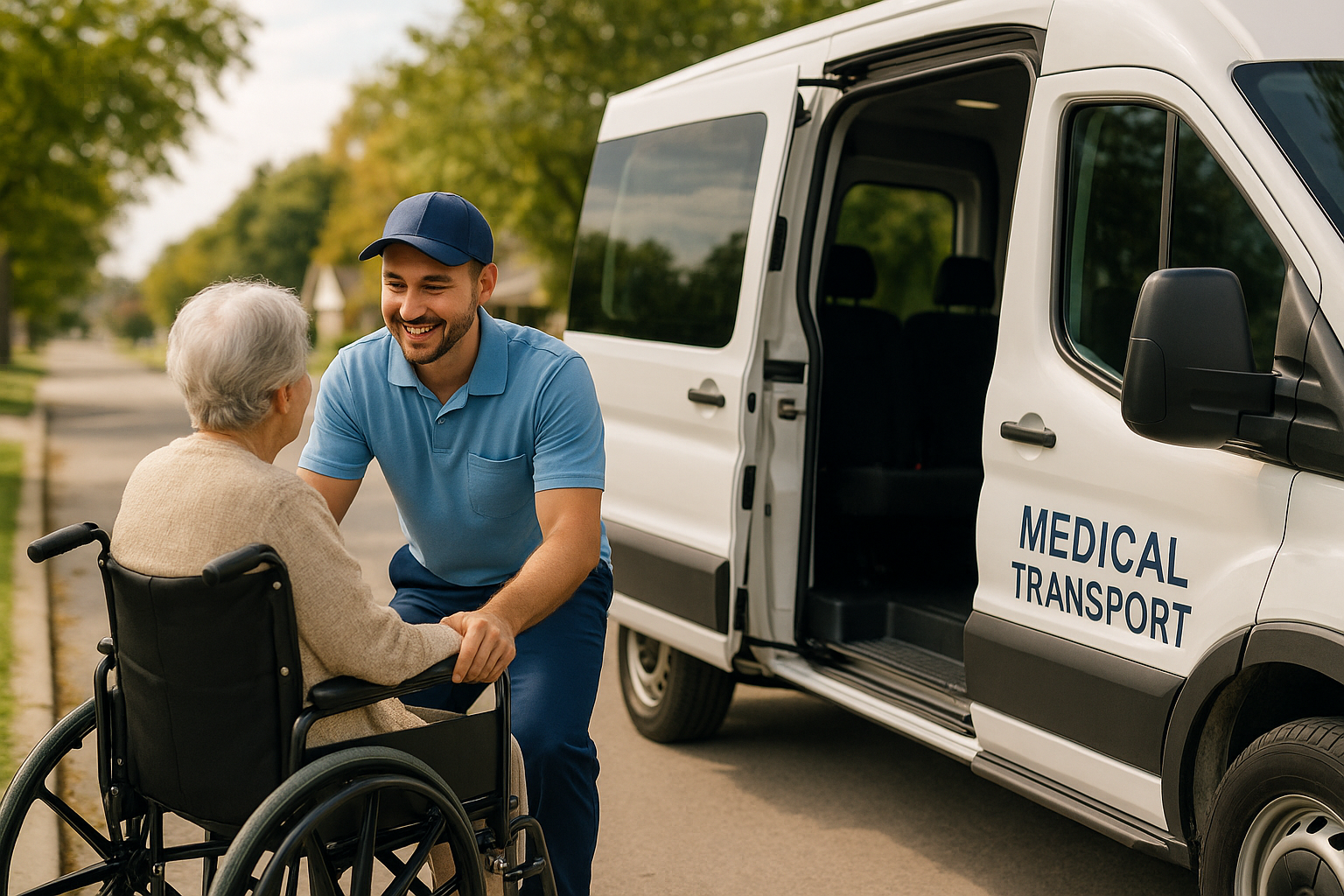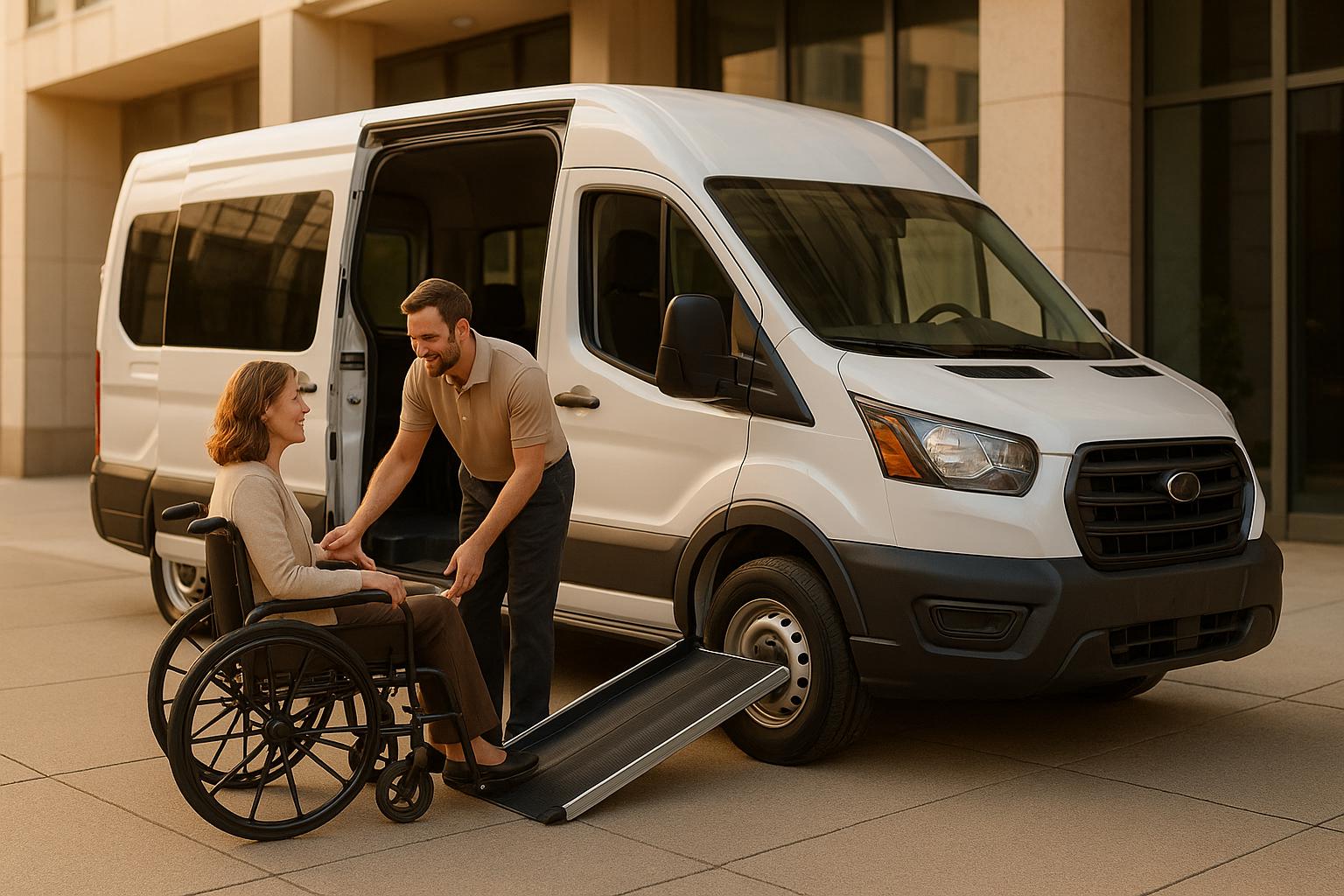

ADA compliance is mandatory for Non-Emergency Medical Transportation (NEMT) providers. Failing to meet these standards can result in fines of up to $75,000 for a first offense and $150,000 for repeat violations. This guide breaks down the key requirements to ensure your fleet, drivers, and policies meet federal regulations, emphasizing safety and accessibility for passengers with disabilities.
Key Highlights:
- Vehicle Accessibility: Wheelchair lifts, ramps, and door widths must meet specific size and weight standards.
- Passenger Safety: Securement systems need to handle up to 4,000 pounds, with proper procedures for securing wheelchairs and mobility devices.
- Driver Training: Staff must complete ADA passenger assistance training, covering equipment operation, communication with passengers, and emergency protocols.
- Fleet Maintenance: Daily inspections and regular maintenance of lifts, ramps, and securement systems are required, with detailed records retained for up to seven years.
- Policies and Documentation: Clear guidelines for service animals, mobility aids, and passenger communication must be in place, along with thorough documentation for audits and insurance purposes.
This checklist ensures compliance, reduces liability, and improves service quality for passengers relying on accessible transportation. Read on for a detailed breakdown of vehicle standards, training, maintenance, and operational policies.
Vehicle Accessibility Requirements
This section outlines the physical adjustments NEMT vehicles need to comply with ADA regulations. Every vehicle in your fleet must meet these federal standards to legally transport passengers with mobility challenges.
Wheelchair Lifts and Ramps
Each NEMT vehicle must have at least one boarding device and securement location. For vehicles longer than 22 feet, two are required.
Wheelchair lifts and ramps must be at least 30 inches wide to accommodate standard wheelchairs and mobility devices. If a ramp exceeds 30 inches in length, it must support at least 600 pounds. Securement systems should handle 2,000 pounds per strap and a total load of 4,000 pounds. These specifications are critical to keeping wheelchairs securely in place during sudden stops or emergencies.
Additionally, all boarding devices need slip-resistant surfaces to prevent accidents during boarding or exiting. Make sure to include surface inspections as part of your daily vehicle checks.
Before adding a vehicle to your fleet, confirm that its lifts and ramps function properly and meet these standards. Request manufacturer certifications verifying that all accessibility equipment complies with ADA requirements, and store these documents in your fleet's records.
Finally, check that the vehicle’s interior layout and safety features also meet ADA guidelines.
Interior Space and Safety Features
Vehicles must provide a clear floor space of at least 30×48 inches to ensure passengers can be positioned safely.
Full-size vans typically offer more interior space and flexibility for accessibility modifications compared to minivans. While both vehicle types can meet ADA standards, full-size vans often provide better fuel efficiency and easier maneuverability in urban settings like Cleveland.
In addition to adequate floor space, vehicles should be equipped with handrails to improve stability for passengers with balance or mobility issues. Proper lighting is essential, especially for passengers with visual impairments or those traveling during early morning or evening hours. Using slip-resistant surfaces inside the vehicle can also help reduce the risk of falls, particularly in wet conditions.
Door Widths and Access Points
Making sure access points are properly designed is another key consideration. Door openings must be at least 32 inches wide to accommodate passengers using wheelchairs, walkers, or other mobility aids. This requirement impacts both vehicle selection and any necessary modifications.
When assessing vehicles, measure door dimensions before purchasing and plan for any adjustments. The 32-inch minimum allows wheelchairs to pass through comfortably and ensures easier boarding for elderly passengers who may need additional space.
Before putting a vehicle into service, double-check door widths and clear floor space to confirm all specifications are met. Make sure door openings are free of obstructions like trim or weather stripping.
Keep records of all measurements and modifications in your fleet documentation. Insurance providers often review these records to determine coverage eligibility and set premiums. Thorough documentation not only shows your commitment to compliance but also helps protect your business during audits or inspections.
For added assurance, consider hiring a third-party accessibility consultant to independently verify compliance before new vehicles are deployed. This proactive step can help you avoid potential compliance issues and minimize insurance risks.
Passenger Securement and Safety Systems
Once your vehicles meet physical accessibility standards, the next step is ensuring passengers and their mobility devices are safely secured during transit. Proper securement not only safeguards passengers during sudden stops or emergencies but also ensures compliance with federal accessibility regulations.
Certified Securement Systems
Securement systems must be able to handle at least 2,000 pounds per strap and a total of 4,000 pounds to keep wheelchairs securely in place during transit. These specifications provide the strength needed to immobilize mobility devices effectively.
Securement points should be permanently mounted to the vehicle's structure and positioned to fit a variety of mobility device sizes. They must not obstruct boarding or create safety risks. Before each trip, drivers should inspect straps, fasteners, and attachment points for wear or damage. Any compromised parts must be replaced immediately.
In addition to daily inspections, conduct thorough maintenance every 3,000 to 5,000 miles, or as recommended by the manufacturer. Keep detailed logs of all inspections, repairs, and replacements, and retain these records for up to seven years to comply with healthcare documentation standards.
Once securement systems are in place and verified, the focus shifts to tailoring safety procedures for different mobility devices.
Passenger Safety Protocols
Securement methods differ based on the type of mobility device. For wheelchairs, a four-point tie-down system is recommended to secure the device at both the front and rear attachment points. Passengers should also use an independent three-point or lap belt system to ensure their safety during transit.
Scooters and other mobility devices often require alternative securement approaches due to variations in design and weight distribution. Drivers should evaluate each device individually to ensure the securing process doesn’t interfere with passenger comfort or safe transfers. Additionally, maintain a 30×48-inch clear floor space to allow mobility devices to maneuver freely. Documenting the type of mobility device and the securement method for each trip helps maintain accurate compliance records.
For more information, refer to the Driver Training and Certification section.
Improper securement can lead to serious consequences, including passenger injuries, liability claims, insurance denials, regulatory violations, and the potential loss of critical contracts. Any securement-related incident must be promptly investigated, thoroughly documented, and addressed to prevent future occurrences. Consistent recordkeeping of securement practices underscores your commitment to ADA compliance and passenger safety.
Driver Training and Certification
Equipping vehicles to meet accessibility standards is just one part of achieving full ADA compliance. The other critical piece? Properly trained drivers. Even with the best vehicles and securement systems, an untrained driver can jeopardize passenger safety and leave your organization exposed to serious legal consequences. Violating federal ADA regulations can result in civil penalties of up to $75,000 for a first offense and $150,000 for repeat offenses. Beyond fines, poor training can lead to passenger injuries, damaged equipment, and a damaged reputation.
ADA Passenger Assistance Training
Before drivers transport their first passenger, they need thorough, hands-on training. This includes mastering lifts, ramps, and securement systems until they can operate them confidently and safely.
Drivers also need to understand that passengers with disabilities have diverse needs, requiring individualized care. For example, they should know how to communicate effectively with passengers who have hearing or speech impairments, including using TTY/TDD equipment. Similarly, assisting passengers with cognitive disabilities requires patience and clear communication techniques.
The Passenger Assistance, Safety and Sensitivity (PASS) program is an industry standard for driver certification, ensuring safe and respectful transportation for passengers. As part of this training, drivers learn proper service animal protocols, including how to accommodate guide dogs and other service animals without interference. When door-to-door assistance is required, drivers must also be trained in body mechanics to protect both themselves and their passengers during transfers.
Defensive driving and customer service skills are equally important. Drivers should always treat passengers with respect and dignity, and practice scenarios can help them develop problem-solving skills for unexpected situations.
"We verify our drivers obtain proper licenses and certifications to ensure safe & reliable service." - ReliaWheels
Emergency Response Preparedness
Emergency situations involving passengers with disabilities require specialized training. Drivers must be prepared to safely evacuate wheelchair users and individuals with mobility challenges without damaging mobility devices. They should also understand the proper procedures for handling medical emergencies, vehicle breakdowns, or accidents involving mobility-impaired passengers.
First aid and CPR certifications are essential, particularly for assisting passengers with chronic conditions or mobility limitations. Drivers also need to know how to troubleshoot common equipment issues, such as a malfunctioning wheelchair lift or a broken securement strap, so they can respond quickly and safely. This training is crucial for reinforcing the safety and emergency protocols discussed earlier.
Certification and Recordkeeping
Drivers must meet several baseline requirements, including holding a valid state-issued license, maintaining a clean driving record, and, where applicable, obtaining DOT medical certifications. They should also pass regular background checks, drug screenings, and physical exams, especially since they work with elderly passengers, individuals with disabilities, and those with chronic conditions.
Training records should document every detail, from completion dates and topics covered to trainer credentials and driver acknowledgments of understanding. Certifications - such as DOT medical certifications, PASS program completion, and first aid/CPR credentials - must be tracked with clear expiration dates and renewal schedules. Keeping these records organized in a centralized system ensures easy access during compliance audits. To meet healthcare documentation standards, records should be retained for up to seven years.
Ongoing professional development is just as critical as initial training. Annual refresher courses keep drivers up-to-date on regulatory changes and new equipment technologies. Feedback from passenger complaints, incident reports, and supervisor observations can further improve driver performance. Peer mentoring, supervisor ride-alongs, and regular competency assessments ensure that training translates into real-world effectiveness.
State-specific regulations can vary widely. Some states require NEMT certification training and have distinct protocols for background checks or drug testing. Regardless of location, all NEMT drivers must maintain transparency about traffic violations and adhere to federal requirements for clean driving records.
Proper training, certification, and recordkeeping form the backbone of safe and compliant operations, supporting the broader policies outlined in later sections.
Fleet Maintenance and Accessibility Inspections
Just like thorough driver training is essential for safe operations, keeping your fleet's accessibility equipment in top shape is equally critical. Faulty lifts, worn-out straps, or damaged ramp surfaces can quickly turn a routine trip into a safety issue. Regular maintenance and detailed inspections not only ensure passenger safety but also protect your operation from hefty penalties - up to $75,000 for a first offense and $150,000 for repeat violations.
Daily Pre-Trip Inspections
Every trip starts with a comprehensive check of accessibility equipment. These daily inspections are your first line of defense against equipment failures and potential injuries. Make sure your checks align with ADA equipment standards.
- Wheelchair Lifts: Confirm smooth operation, proper extension and retraction, a 600-pound weight capacity, and functionality of the emergency lowering system. Keep platforms free of debris.
- Ramps: Test extension and retraction, inspect the slip-resistant surface, ensure a 30-inch width and proper angle, and verify secure locking in both extended and stored positions.
- Securement Systems: Examine straps for wear and ensure they can handle 2,000 pounds each (4,000 pounds total). Check that safety gates and barriers latch securely.
- Doors and Interior Space: Ensure doors open and close smoothly, handles are accessible, and there is enough clearance for wheelchairs or mobility devices. Clear any obstructions from aisles or access points.
Document your findings thoroughly - include the date, time, vehicle ID, and driver name. If defects are found, immediately remove the vehicle from service until repairs are complete.
Routine Maintenance Schedules
Daily checks are essential, but they only address immediate concerns. To prevent long-term issues, follow a structured maintenance schedule, typically every 3,000 to 5,000 miles or as recommended by the equipment manufacturer.
- Securement Systems: Perform load tests to ensure straps and anchor points meet required weight capacities. Document test dates, results, and any adjustments. Remove and repair systems that fail these tests.
- Fasteners and Attachments: Inspect for stress, corrosion, or looseness. Tighten or replace components as needed.
- Wheelchair Lifts: Service lifts according to their schedule. This includes lubricating moving parts, checking hydraulic fluid levels, inspecting electrical connections, and testing safety sensors.
- Ramps: Ensure smooth operation of extension mechanisms and address wear on slip-resistant surfaces before they become hazards.
To maintain high standards, technicians working on ADA equipment must be certified. Partnering with manufacturers for training programs and certifications not only reduces equipment failures but also ensures regulatory compliance.
Documentation and Record Retention
Accurate recordkeeping is key to staying compliant and protecting your operation during audits or legal reviews. Every maintenance activity should be documented in detail.
- What to Record: Include the vehicle ID, service date, mileage, specific work performed, parts replaced, technician details, and any defects found or fixed.
- Inspection Logs: Note the condition of fasteners, mobility equipment, and safety systems. Record findings from daily inspections, including defects and corrective actions. If a vehicle is removed from service, document the issue, repairs, and verification of resolution.
- Load Testing Records: Keep records of test dates, applied weights, and results. Retain all maintenance and repair documents for at least seven years.
Using advanced fleet management software can simplify these processes. Automated alerts, inspection tracking, and compliance reports help ensure your records are organized and accessible.
At ReliaWheels | NEMT for Cleveland Ohio, we prioritize meticulous maintenance and recordkeeping. This commitment ensures our fleet remains fully ADA-compliant, delivering safe and dependable transportation for every passenger.
sbb-itb-a0ce227
Operational Policies and Client Communication
Having well-documented accessibility policies is essential for maintaining consistent compliance. These operational procedures should align with both vehicle and driver standards to meet ADA requirements effectively. Clear written policies not only help guide staff in their interactions with passengers who have disabilities but also highlight your organization’s commitment to providing equal access. Insurance underwriters often evaluate compliance programs by reviewing policies on service animals, assistive devices, client communication, and emergency procedures. Together, these policies and standards create a solid framework for ADA compliance.
Service Animal and Mobility Aid Policies
Your service animal policy needs to explicitly allow service animals without any discrimination. Define service animals in accordance with ADA guidelines and include specifics such as where service animals should sit during transport (typically with their handler), how drivers should interact respectfully with handlers, and what steps to take in case a service animal becomes disruptive.
For mobility devices, your policies should detail the boarding and disembarking process step by step. Include guidelines for securing wheelchairs and other mobility aids during transport, as well as addressing unique requirements for specific devices.
It’s important to make these policies accessible in various formats. For instance, when clients book rides, ensure staff document any special handling needs for mobility devices in trip records. This creates a clear audit trail and helps provide a seamless experience for passengers.
While having detailed policies is crucial, clear and effective communication is just as important in meeting passengers’ needs.
Accessibility Requests and Communication
Passengers should have multiple ways to communicate their accessibility needs. Your booking process should accommodate diverse communication preferences by offering options through your dispatch system, booking portal, phone lines, and in-person interactions.
Train staff to record all accessibility requests accurately. For example, if a client mentions needing extra boarding time, a specific vehicle type, or assistance with a mobility device, this information should be captured in your system and relayed to the assigned driver. For passengers with hearing or speech impairments, provide TTY/TDD services. Staff should also be trained in alternative communication methods, like using written notes, and drivers should face passengers when speaking to ensure clarity.
Make accessibility information available in formats that cater to different needs, such as large print, screen reader-compatible digital formats, and audio descriptions on your website and booking platforms. At ReliaWheels | NEMT for Cleveland Ohio, for example, we clearly outline the availability of wheelchair-accessible vehicles and stretcher transport options, ensuring clients know how to request the services they need during booking.
Equally important is having a robust plan for emergencies to ensure both service continuity and passenger safety.
Emergency and Incident Response Plans
Emergency protocols should cover situations like medical emergencies, vehicle breakdowns, accidents, and evacuations. Drivers must be trained to assist passengers with mobility devices during emergencies, including safely evacuating someone in a wheelchair and effectively communicating with passengers who have cognitive or communication challenges. Protocols should also address how to handle service animals during emergencies, as these animals may become stressed or protective.
Document all emergency procedures and review them regularly with staff. Maintain training records to show that drivers, dispatchers, and fleet managers understand their responsibilities in crisis situations. When incidents occur, create detailed documentation that includes what happened, how it was managed, any injuries or damages, and the corrective actions taken to prevent future occurrences.
Keep thorough records of all accessibility requests and accommodations. Include details like the client’s specific needs, the assigned vehicle, equipment used, and any special assistance provided. Retain these records for up to seven years to comply with healthcare documentation standards.
Additionally, establish a clear complaint resolution process for accessibility-related issues. Clients should be able to report problems - such as barriers to access, inadequate accommodations, or discriminatory treatment - through multiple channels, including phone, email, in-person, or TTY/TDD. Provide clear timelines for acknowledging, investigating, and resolving complaints. Regularly review these complaints to identify recurring issues, such as equipment malfunctions or gaps in staff training, and address them promptly.
Compliance Documentation and Insurance Verification
Keeping your compliance records in order isn't just about staying organized - it’s a key part of protecting your business during audits and showing your dedication to accessibility. Insurance underwriters and state agencies rely on these records to evaluate your ADA compliance, making thorough and well-maintained documentation essential for regulatory approval and managing risks. These records also tie directly into operational policies and fleet maintenance, forming a strong foundation for your ADA compliance strategy.
Insurance Coverage Documentation
Your commercial insurance policy needs to meet state minimum requirements while addressing specific accessibility-related risks. Standard liability coverage simply won’t cut it - you’ll need coverage for incidents like wheelchair lift malfunctions, securement system failures, or injuries involving accessibility equipment. It’s also crucial to include protection for damage to passengers’ mobility aids, such as wheelchairs, walkers, or oxygen equipment, during transit.
Make sure your documentation includes:
- Certificates of insurance
- Policy declarations with coverage limits
- Evidence of coverage for ADA-related incidents
Underwriters will assess factors like fleet specifications, vehicle condition, driver records, and accessibility documentation. To avoid gaps in coverage, review your policy with your insurance broker and confirm your state’s specific insurance requirements through your Medicaid program or transportation authority.
Contractual Obligations and Certifications
When setting up agreements, ensure your contracts explicitly reflect your ADA commitments. For Medicaid provider enrollment, documentation must clearly reference ADA compliance. Contracts should specify that vehicles meet ADA standards, such as:
- Wheelchair lifts with a minimum capacity of 600 pounds
- Securement systems rated at 2,000 pounds per strap (4,000 pounds total)
- Ramps or lifts with at least 30 inches of width
Additionally, contracts should outline driver training requirements, including ADA passenger assistance certification, and define maintenance schedules for accessibility equipment. Keep copies of your Medicaid provider agreement, along with any amendments or addendums related to accessibility. State-specific certification requirements also vary. For example, Arizona requires NEMT certification training and completion of the PT-28 packet through AHCCCS, while California mandates a Public Transportation Permit from the California Public Utilities Commission.
Having all permits and certifications on file not only ensures compliance with ADA regulations but can also strengthen your standing with underwriters, potentially leading to lower premiums.
Evidence of Accessibility Compliance
Maintaining detailed inspection logs is critical for documenting the condition of accessibility features. Retain these records for up to seven years to meet healthcare documentation standards. Daily pre-trip inspections should cover wheelchair lifts, ramps, securement systems, and slip-resistant surfaces. Logs should include:
- Date of inspection
- Vehicle identification number
- Inspector’s name
- Any issues identified
Maintenance records should detail repairs, routine servicing, and safety checks, following either a 3,000 to 5,000-mile schedule or manufacturer guidelines. If a vehicle is out of service, document repairs, replacements, or the use of alternative vehicles to show your commitment to accessible transportation. A centralized system to track each vehicle’s compliance history is invaluable.
Driver qualification records are another essential component. These should include:
- Valid driver’s licenses for the vehicle type
- Background checks and drug testing documentation
- Proof of ADA passenger assistance training, covering wheelchair lift operation, securement system use, communication with passengers with disabilities, and emergency procedures
Training records should also include course completion certificates, training dates, trainer credentials, and details of any refresher courses. Insurers often require this proof of routine driver training in ADA-related operations. At ReliaWheels | NEMT for Cleveland Ohio, we ensure all drivers hold the necessary licenses and certifications to provide safe and dependable service.
For accessibility equipment, maintain certification documents such as manufacturer certificates confirming compliance with federal standards. For instance, wheelchair lifts and ramps should meet specifications like a minimum 30-inch width and a 600-pound capacity. Keep records of installation dates, installer credentials, user manuals, and safety instructions. Document any recalls or safety notices, along with actions taken to address them.
Organize all compliance documentation by vehicle, category (such as insurance, maintenance, or driver qualifications), and time period. Use a master checklist to track which documents are on file for each vehicle and driver. Digital systems with clear file naming conventions and version control can simplify this process. Conduct internal audits quarterly or semi-annually, and document findings along with corrective action plans. These audits are crucial for insurance underwriting reviews. Be ready to provide inspection logs, maintenance records, driver qualifications, insurance documentation, and policy evidence during audits. Keeping an updated list of state certifications, permits, and licenses - including expiration dates - further demonstrates your dedication to ADA compliance. A centralized system ensures seamless compliance verification across all areas, supporting ongoing reviews and operational audits as outlined earlier.
Conclusion
ADA compliance isn't just about ticking boxes; it's about creating a transportation system that prioritizes dignity, safety, and accessibility for everyone. The checklist we've discussed highlights the core elements: accessible vehicles with reliable lifts and ramps, drivers trained to assist passengers with disabilities, rigorous maintenance routines, and thorough documentation to showcase your dedication to accessibility.
These pieces work together as part of a larger compliance strategy. For example, a wheelchair lift that meets the 600-pound capacity requirement is only effective if the driver knows how to operate it safely and the maintenance team ensures it’s inspected daily. A failure in any single area - whether it’s skipped maintenance, insufficient training, or unclear communication - weakens the entire system, putting both passengers and your business at risk.
The financial implications of non-compliance are serious, with violations leading to hefty penalties. For businesses with 15 or more employees, ADA compliance is a legal obligation, not a choice. Beyond monetary fines, failing to meet standards can result in lost Medicaid contracts, legal challenges, and damage to your reputation within the healthcare community.
However, compliance brings more than just legal protection - it builds trust and loyalty among passengers. Features like slip-resistant surfaces, wide ramps, and dependable securement systems not only meet ADA standards but also enhance safety and comfort for everyone. At ReliaWheels | NEMT for Cleveland Ohio, we embody this commitment by offering wheelchair-accessible vehicles and specialized services like stretcher transport, ensuring every client experiences safe and dignified travel.
This checklist should be treated as a dynamic tool, not a one-time task. Review it regularly - quarterly or semi-annually - to pinpoint areas needing improvement. Track metrics like driver certification rates, pre-trip inspection results, and adherence to maintenance schedules. These data points help you identify trends and demonstrate compliance to regulatory bodies and Medicaid contractors. Keep in mind that state-specific requirements may add to federal standards, so always verify local mandates.
When gaps emerge during reviews, address them systematically. Tackle immediate safety concerns first, such as non-functional wheelchair lifts or insufficient driver training. Set realistic timelines to resolve issues, allocate the necessary budget for vehicle updates or training programs, and document every step of the remediation process. For example, if a securement system fails inspection, take that vehicle out of service until repairs are completed and verified.
Incorporating these measures into daily operations ensures ADA compliance becomes second nature. When every team member understands the importance of accessibility and takes pride in delivering respectful service, compliance evolves from a regulatory task into a genuine commitment to equity. With millions of Americans relying on wheelchairs for mobility, accessible transportation is not just a legal necessity - it’s a reflection of your organization’s core values and dedication to serving the community.
Using this checklist consistently safeguards both your passengers and your business’s future. It’s an investment in operational excellence that reinforces your role as a leader in inclusive healthcare transportation.
FAQs
What are the consequences for NEMT providers who fail to meet ADA compliance standards?
Non-emergency medical transportation (NEMT) providers who don’t follow the guidelines set by the Americans with Disabilities Act (ADA) can face serious repercussions. These might include fines, legal disputes, or lawsuits from individuals or advocacy organizations. Beyond the legal and financial risks, non-compliance can damage a provider’s reputation and jeopardize contracts or funding, especially when working with programs like Medicaid or Medicare.
Meeting ADA standards isn’t just about following the law - it’s about offering services that are safe, accessible, and welcoming to everyone. Regularly evaluating your operations and vehicles to ensure they align with ADA requirements can help reduce risks and strengthen trust within your community.
What steps can NEMT providers take to ensure their drivers are properly trained to assist passengers with disabilities?
Non-Emergency Medical Transportation (NEMT) providers play a crucial role in ensuring passengers with disabilities receive safe and reliable service. One way to achieve this is by requiring drivers to complete specialized training programs. These programs typically focus on essential skills like proper wheelchair handling, assisting passengers who use mobility devices, and adhering to ADA guidelines.
It’s equally important for providers to confirm that all drivers have the required licenses and certifications to perform their duties effectively. Offering regular refresher training sessions can also help drivers stay current with best practices, ensuring they’re well-equipped to meet the needs of passengers with varying requirements.
What vehicle features are required to ensure ADA compliance for wheelchair accessibility?
To comply with ADA requirements for wheelchair accessibility, vehicles need specific modifications that focus on safety and ease of use for passengers with mobility challenges. Key features include a wheelchair lift or ramp, ample interior space to secure a wheelchair, and tie-down systems to keep the wheelchair stable during travel. Wide doors and low floors are also essential, making it easier for passengers to board and exit the vehicle. These adjustments play a crucial role in providing a more inclusive and accessible transportation experience for everyone.