
If you're a Non-Emergency Medical Transportation (NEMT) driver in Ohio, staying compliant with state regulations and ensuring passenger safety is non-negotiable. Here's what you need to know:
- Ohio Law Requirements: NEMT drivers must complete state-approved passenger assistance training every three years, plus maintain current CPR and First Aid certifications.
- Top Programs:
- NEMTAC CTS: Nationally recognized, focuses on safety and mobility device handling. Certification valid for 2 years.
- CTAA PASS: Emphasizes passenger assistance and emergency management. Certification valid for 3 years.
- Ohio EMFTS-Approved Training: Meets state-specific regulations, covering sensitivity, disease awareness, and emergency procedures.
- DRIVE Training (COAAA): Focuses on assisting older adults and disabled passengers, aligned with Ohio Medicaid Waiver standards.
- CPR/First Aid Certification: Mandatory for all NEMT drivers, with 2-year renewal cycles.
Each program equips drivers with the skills to handle emergencies, assist passengers with mobility challenges, and comply with Ohio's legal standards. Whether you're based in Cleveland, Akron, or elsewhere in Ohio, these certifications ensure you're prepared for the job.
Quick Comparison
| Program | Certification Validity | Key Focus Areas | Renewal Requirements | Availability in Ohio |
|---|---|---|---|---|
| NEMTAC CTS | 2 years | Safety, compliance, mobility securement | Re-exam or continuing education | Online, nationally accepted |
| CTAA PASS | 3 years | Passenger assistance, emergency handling | Online renewal or workshop | Available in-person/online |
| Ohio EMFTS | 3 years | Sensitivity, disease awareness, transfers | Retake approved course | Local state providers |
| DRIVE (COAAA) | Varies | Assisting older adults, quality assurance | Per agency requirements | In-person (Central Ohio) |
| CPR/First Aid | 2 years | Life-saving techniques | Hands-on recertification | Local providers statewide |
These programs not only meet legal requirements but also equip drivers with practical skills to ensure safe and reliable transportation services.
NEMT Driver Training and Certification
1. NEMTAC Certified Transportation Specialist (CTS) Program
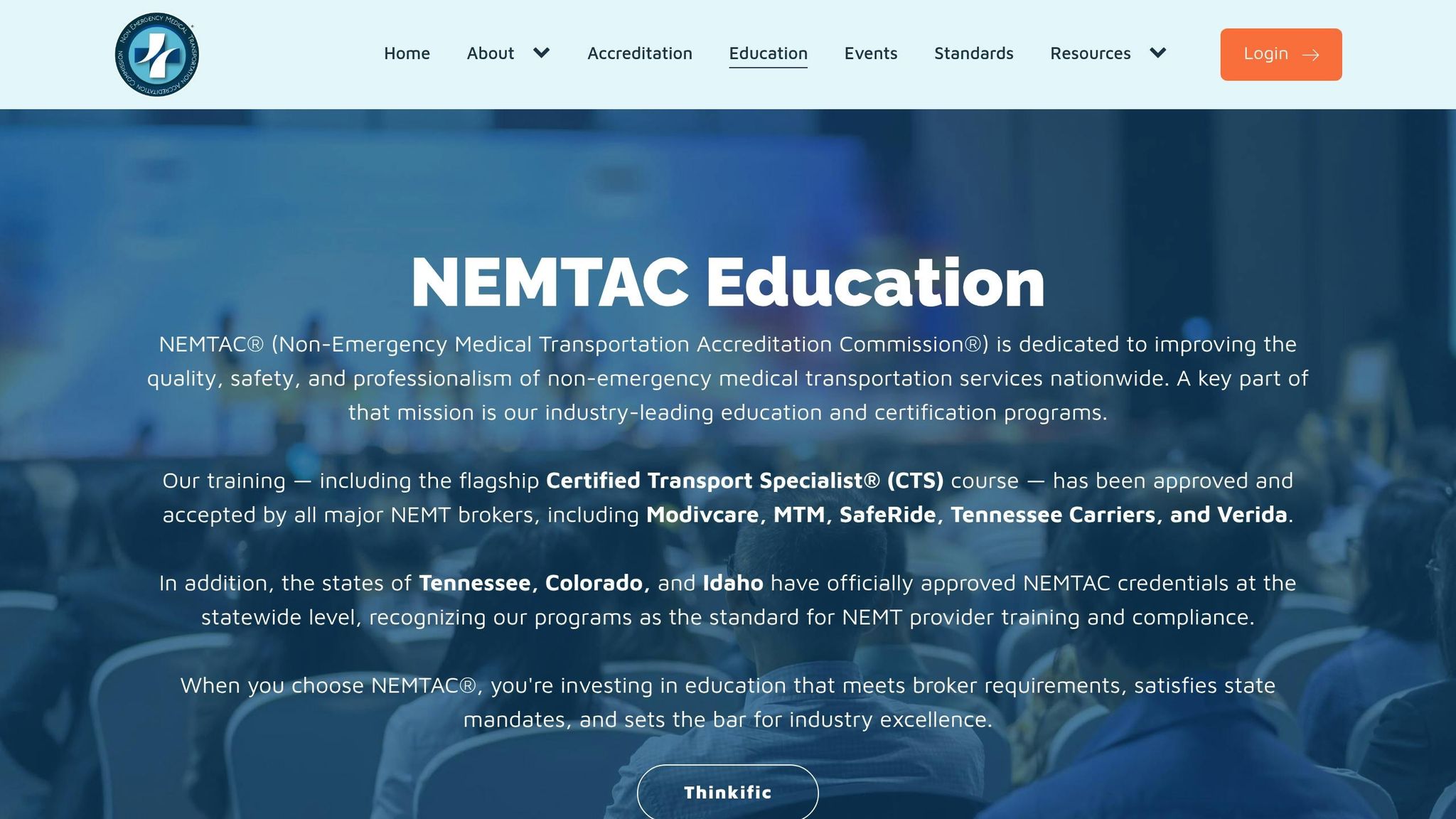
The NEMTAC Certified Transportation Specialist (CTS) Program is a nationally recognized, self-paced training designed specifically for Non-Emergency Medical Transportation (NEMT) drivers. This program focuses on critical areas like customer service, safety protocols, professional ethics, and operator requirements.
What the Program Covers
The curriculum dives into emergency preparedness, with a strong focus on safely securing mobility devices. It also includes specialized modules like Advanced Mobility Device Securement (AMDS) and Certified Stretcher Operator (CSO), catering to drivers who assist passengers with unique mobility needs.
Certification Duration and Renewal
CTS certification remains valid for two years. To maintain certification, drivers must complete renewal requirements every two years, which include updated coursework or assessments to reflect the latest safety standards. This ensures that drivers stay current with industry expectations and maintain the highest levels of service.
Why It Matters for Ohio NEMT Drivers
For NEMT drivers in Cleveland and Akron, earning CTS certification means delivering safer and more dependable service. The program’s national accreditation is highly regarded by industry brokers, which can open doors to better job opportunities. Local providers, like ReliaWheels | NEMT for Cleveland Ohio, gain a competitive edge by employing CTS-certified drivers who consistently meet these rigorous standards.
Convenient Online Access
The CTS Program is available online, making it an accessible option for drivers in Cleveland and Akron who need flexible learning schedules. Feedback from the industry highlights that CTS-certified drivers tend to demonstrate improved safety practices, stronger compliance, and higher customer satisfaction.
2. CTAA Passenger Assistance Safety and Sensitivity (PASS) Certification
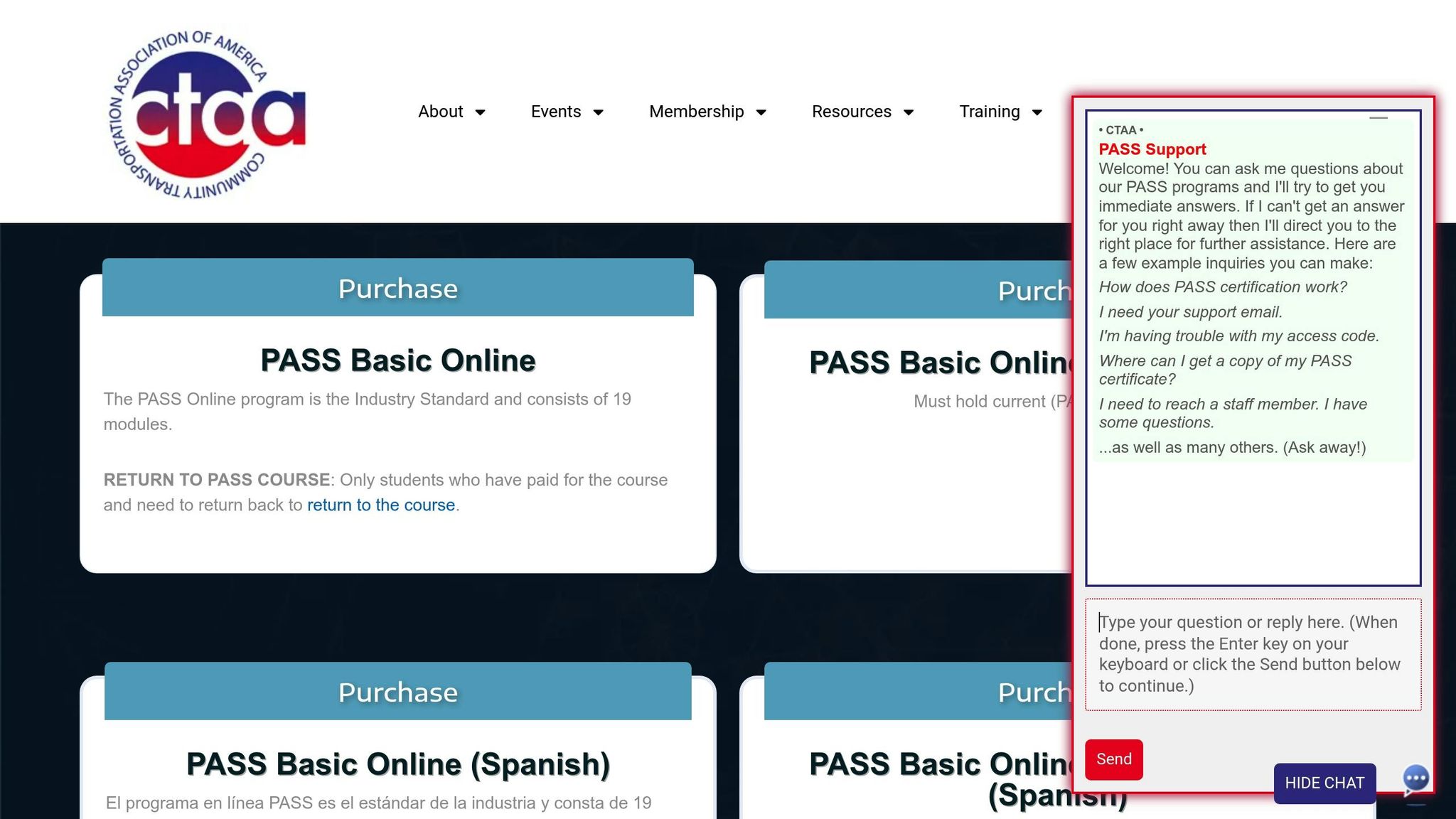
The Community Transportation Association of America's Passenger Assistance Safety and Sensitivity (PASS) Certification is a well-regarded program aimed at equipping community transportation drivers with the skills and understanding to assist passengers with disabilities and special needs effectively. Here's a closer look at what the program offers.
Content Focus
The PASS program emphasizes training in emergency management and passenger assistance. Drivers learn practical techniques for supporting passengers with special needs, stay informed about regulatory updates, and gain the confidence to handle emergency situations.
What sets this program apart is its combination of technical training and an emphasis on compassion. Drivers are not only prepared to manage emergencies but are also trained to treat passengers with the care and respect they deserve.
Certification Validity and Renewal Requirements
PASS certification is valid for three years, aligning with Ohio's regulatory requirements for passenger assistance training. Renewals can be completed online or through a workshop, offering flexibility for professionals with demanding schedules.
The training itself is available in two formats: a two-day session led by CTAA instructors or a three-day Train-the-Trainer workshop, which enables organizations to develop their own in-house trainers.
Relevance to Ohio-Based NEMT Drivers
For non-emergency medical transportation (NEMT) providers in Ohio, PASS certification is not just a regulatory requirement - it’s also a way to minimize liability while maintaining high standards of service. For example, companies like ReliaWheels | NEMT for Cleveland Ohio, which specialize in wheelchair-accessible transportation for mobility-impaired clients, benefit from having PASS-certified drivers to ensure safe, compliant, and professional service.
Local Availability in Cleveland and Akron
While specific details about CTAA PASS training in Cleveland and Akron may not be widely available, local providers are encouraged to contact CTAA directly for training schedules. Given its national recognition, PASS certification can also be a valuable credential for meeting contract requirements in the area.
3. Ohio EMFTS-Approved Passenger Assistance Training
Ohio's Emergency Medical, Fire, and Transportation Services (EMFTS) board mandates that all Non-Emergency Medical Transportation (NEMT) drivers complete specific passenger assistance training. This training equips drivers to safely transport passengers who have mobility challenges or special needs - especially critical for serving the aging populations in cities like Cleveland and Akron. Below, we’ll explore the program’s details, certification process, and its local significance.
What the Training Covers
The training is designed to address several key areas, including:
- Aging sensitivity and disease awareness
- Proper techniques for transferring passengers
- Safe wheelchair handling and lift operation
- Emergency evacuation procedures
The program combines classroom instruction with hands-on practice to ensure drivers are well-prepared for real-life scenarios.
Certification Duration and Renewal
Newly hired drivers are required to complete this training within six months of starting their job. Once certified, the training remains valid for three years [1].
Why It Matters for Ohio NEMT Drivers
This training isn’t just a formality - it’s a legal requirement under Ohio Administrative Code 4766-3-13. Complying with these standards helps protect NEMT providers from penalties and liability issues. For companies like ReliaWheels | NEMT for Cleveland Ohio, having drivers trained under the EMFTS guidelines is essential for safely transporting clients with mobility impairments while adhering to state regulations.
Accessing Training in Cleveland and Akron
In Cleveland and Akron, NEMT providers have two main options for meeting this requirement. They can either enroll drivers in approved commercial training programs or develop their own courses, as long as the program is pre-approved by the State Board of EMFTS. It’s important for providers to confirm that any chosen program meets all state criteria, including both classroom and hands-on training components.
sbb-itb-a0ce227
4. DRIVE Training by Central Ohio Area Agency on Aging (COAAA)

DRIVE Training is a certification program designed specifically for drivers who assist aging and disabled passengers. Offered by the Central Ohio Area Agency on Aging (COAAA), this program prepares Non-Emergency Medical Transportation (NEMT) drivers to meet the unique challenges of serving some of Ohio's most vulnerable populations.
What the Training Covers
The program focuses on key areas like safety protocols, sensitivity training, emergency procedures, and the proper use of assistive equipment, including wheelchair lifts. What makes DRIVE Training stand out is its emphasis on clear communication and hands-on practice with assistive tools.
Drivers gain skills to assist passengers facing cognitive, mobility, and age-related challenges. The training ensures they can create a safe and comfortable environment for passengers while navigating the complexities of medical transportation.
Why It Matters for Ohio NEMT Drivers
In Ohio, DRIVE Training meets critical regulatory requirements for transportation providers. It satisfies quality assurance standards outlined under the Older Americans Act Title III services and Ohio's PASSPORT Medicaid Waiver program.
For companies like ReliaWheels, having DRIVE-certified drivers ensures compliance with these standards while providing safe and reliable transportation for older adults and individuals with disabilities. The program is especially relevant for door-to-door medical transport and wheelchair-accessible vehicle operations, which are key services for professional NEMT providers.
Accessibility for Cleveland and Akron Providers
Although COAAA is based in Central Ohio, the training is available to NEMT providers and drivers in Cleveland and Akron through scheduled in-person sessions. COAAA regularly organizes training events and train-the-trainer programs, making it easier for providers in northern Ohio to participate.
For added convenience, Cleveland and Akron-based companies can coordinate with COAAA to arrange group sessions or inquire about upcoming training dates in their area. This flexibility helps NEMT providers ensure their drivers receive the necessary training without the burden of extensive travel, keeping them aligned with evolving compliance requirements.
Certification Validity and Renewal
The validity of DRIVE Training certification depends on the requirements of the contracting agency. While renewal timelines vary, providers are typically responsible for ensuring their drivers complete periodic recertification or refresher courses as mandated by regulatory authorities.
This ongoing process ensures that NEMT drivers remain up-to-date with best practices and any changes to regulations affecting the safe transportation of aging and disabled individuals in Ohio.
5. CPR and First Aid Certification for NEMT Drivers
For non-emergency medical transportation (NEMT) drivers, CPR and First Aid certification is more than just a requirement - it's a lifeline. This training ensures drivers are prepared to handle medical emergencies that may arise during transport, offering critical support to passengers in need. In Ohio, obtaining this certification is mandatory for all NEMT drivers.
What the Training Covers
CPR and First Aid training is hands-on and practical, focusing on key life-saving techniques. Drivers learn adult CPR, how to use an automated external defibrillator (AED), and basic first aid skills for emergencies like choking, severe bleeding, and shock. These skills are particularly crucial for handling situations such as cardiac arrest or respiratory distress, especially when transporting high-risk individuals.
Why It Matters for Ohio NEMT Drivers
Ohio law requires all NEMT drivers to maintain current CPR and First Aid certifications. This regulation is designed to prioritize passenger safety across the state’s medical transportation services. For companies like ReliaWheels in Cleveland, which specializes in wheelchair-accessible and door-to-door medical transportation, ensuring that drivers are prepared for emergencies is a key part of delivering safe and reliable service. Drivers often work with passengers who have mobility issues or chronic health conditions, making emergency readiness a top priority.
To meet state requirements, certifications must be obtained through organizations approved by Ohio's Board of Emergency Medical, Fire, and Transportation Services (EMFTS). Approved providers include:
- American Red Cross
- American Heart Association
- American Safety and Health Institute (ASHI)
- National Safety Council
- EMS Safety
Certification Renewal and Validity
In Ohio, CPR and First Aid certifications for NEMT drivers must be renewed every two years. This ensures that drivers stay up-to-date on the latest techniques and protocols. Renewal requires hands-on training through an approved provider - online-only courses do not meet state standards. Employers are responsible for tracking certification expiration dates and ensuring timely renewals.
Local Training Options in Cleveland and Akron
For drivers in Cleveland and Akron, finding approved CPR and First Aid courses is straightforward. Community colleges, hospitals, and training centers in these areas offer sessions specifically tailored to NEMT professionals. Organizations like the American Heart Association provide courses across Ohio, making it convenient for drivers to access training. Some employers even organize group sessions to simplify the process for their teams. Regardless of where the training takes place, it’s essential to verify that the provider is approved by Ohio's Board of EMFTS.
Training Program Comparison
Choosing the best emergency training program for NEMT drivers can feel like a daunting task. To make the decision easier, the table below highlights the main differences between several popular options. This side-by-side comparison reflects the strengths and limitations discussed earlier.
| Program | Certification Validity | Renewal Requirements | Content Focus | Cleveland/Akron Availability |
|---|---|---|---|---|
| NEMTAC CTS | 2 years | Re-exam or continuing education | NEMT best practices, safety, compliance, mobility securement | Online, accepted by major brokers |
| CTAA PASS | 3 years | Online renewal or workshop | Passenger assistance, sensitivity, emergency procedures | Online/in-person, Ohio workshops available |
| Ohio EMFTS-Approved | 3 years | Retake approved course | Sensitivity training, disease overview, transfer techniques, wheelchair management | Local state-approved providers |
| DRIVE (COAAA) | Varies by program | Per Older Americans Act/PASSPORT requirements | Transporting older adults/disabled clients, quality assurance | In-person, Central Ohio |
| CPR/First Aid | 2 years | Hands-on recertification course | Emergency response, life-saving techniques | Multiple local providers, in-person required |
Key Takeaways for Comparing Programs
- NEMTAC CTS: This program is widely recognized across the industry and includes bundled credentials, making it a solid choice for drivers seeking comprehensive training.
- CTAA PASS: With a three-year certification period, this program emphasizes passenger assistance, sensitivity, and emergency procedures. Its online renewal option is particularly appealing for busy drivers.
- Ohio EMFTS-Approved Training: For drivers needing to meet Ohio-specific regulations under OAC 4766-3-13, this course is essential. It covers topics like sensitivity training, disease awareness, and wheelchair management, aligning with state requirements.
- Cost and Accessibility: Pricing varies by program. NEMTAC CTS often includes bundled credentials, while CTAA PASS may offer group discounts for fleets. These options can help organizations stay compliant without breaking the budget.
- Hands-On Training: Programs like DRIVE Training and CPR/First Aid require in-person participation to meet regulatory standards, ensuring drivers gain practical, real-world skills.
- Renewal Schedules: Pairing programs with different renewal timelines - such as the 2-year NEMTAC CTS and 3-year CTAA PASS - can simplify fleet compliance management and reduce the burden on drivers.
- Specialized Populations: Drivers who work with older adults, individuals with disabilities, or those needing stretcher transport may benefit from targeted training. Options like DRIVE Training and Ohio EMFTS-Approved courses address these specific needs, while NEMTAC offers additional certifications for Advanced Mobility Device Securement and Certified Stretcher Operator roles.
This detailed comparison can help organizations and drivers choose the training programs that best fit their needs, ensuring compliance, safety, and effective service delivery.
Conclusion
Choosing the right emergency training program is essential for NEMT drivers in Cleveland and Akron to maintain passenger safety, comply with Ohio's regulations, and deliver professional service. Ohio law requires NEMT drivers to complete board-approved passenger assistance training every three years, along with current CPR and First Aid certifications. Skipping these requirements or selecting a program that doesn’t align with state standards can lead to penalties and compromise service quality.
Programs like NEMTAC CTS, CTAA PASS, or Ohio EMFTS-approved training provide the tools and knowledge drivers need to offer safe and reliable transportation. By meeting these state-approved standards, providers not only ensure compliance but also improve service quality and reduce liability, which strengthens their reputation in the community.
For NEMT providers in Northeast Ohio, it’s vital to choose training programs that combine hands-on practice with regular renewals. Whether you opt for Ohio EMFTS-approved courses to meet regulatory requirements or a program like NEMTAC CTS for broader industry recognition, align your training choice with both state mandates and the specific needs of your client base.
Emergency training isn’t just about meeting the basics - it’s about protecting vulnerable passengers and establishing a trusted name in Cleveland and Akron’s medical transportation industry.
FAQs
What’s the difference between the NEMTAC CTS and CTAA PASS programs, and how do I choose the best one?
The NEMTAC CTS (Certified Transport Specialist) and CTAA PASS (Passenger Assistance, Safety, and Sensitivity) programs are both tailored to sharpen the skills of NEMT drivers, though they each focus on distinct aspects of the job.
The NEMTAC CTS program centers on in-depth training related to emergency preparedness, safety protocols, and advanced transportation techniques. This makes it an excellent choice for drivers aiming to excel in managing critical or high-pressure situations. Meanwhile, the CTAA PASS program focuses on delivering outstanding passenger care. It includes training in sensitivity, safe assistance, and accommodating individuals with mobility challenges.
When deciding between the two, think about your professional goals and the needs of your passengers. If you're looking to enhance your ability to handle emergencies and technical scenarios, the CTS program is likely a better match. However, if your priority is ensuring passenger comfort, safety, and accessibility, the PASS program might be the way to go.
What should I look for in an emergency training program to ensure it meets Ohio's regulations for NEMT drivers?
To meet Ohio's regulations for NEMT drivers, make sure the emergency training program addresses all state-required elements. This includes passenger safety, the proper use of equipment, and emergency response procedures. Additionally, confirm whether the program is certified or recognized by Ohio's transportation or healthcare authorities.
It’s equally important to ensure the training provides hands-on practice and includes the latest techniques for assisting passengers with mobility challenges - an essential skill for delivering NEMT services effectively.
Can NEMT drivers in Ohio complete CPR and First Aid certification online?
Yes, NEMT drivers in Ohio have the option to earn their CPR and First Aid certification through online programs, provided these programs meet the state’s requirements. Many well-known organizations offer blended learning formats, allowing drivers to complete the theoretical coursework online and then attend an in-person session to demonstrate their skills and finalize certification.
Before signing up for any program, it’s important to verify that it’s approved by Ohio’s regulatory authorities and tailored to the training needs of NEMT drivers. This helps ensure both compliance with state guidelines and readiness to handle emergencies while on duty.