

Reliable transportation for dialysis patients in Cuyahoga County is critical for their health. Dialysis treatments, often needed three times a week, are essential to managing life-threatening conditions like fluid overload and high potassium levels. However, transportation challenges - such as scheduling conflicts, communication breakdowns, and inadequate vehicle access - frequently cause missed or shortened treatments, leading to poor health outcomes.
Key solutions include:
- Centralized scheduling systems to align transport with treatment times.
- Dedicated transportation coordinators to manage logistics and reduce delays.
- Individualized transportation plans to meet specific patient needs, like wheelchair access.
- Services like ReliaWheels, which provide ADA-compliant vehicles, trained drivers, and direct coordination with dialysis centers.
Data shows that improving transportation reliability reduces missed treatments, hospitalizations, and stress for patients. By addressing these issues, we can ensure that patients receive consistent access to the care they need to stay healthy.
Common Problems with Dialysis Transportation
Dialysis transportation in Cuyahoga County faces a range of challenges, from scheduling conflicts to communication breakdowns, all of which can disrupt essential treatment for patients.
Schedule Conflicts Between Transport Providers and Dialysis Centers
Rigid schedules and shared-ride systems often create timing issues, delaying patients or forcing them to arrive too early. For example, Laketran's Cuyahoga County Medical Service operates on fixed arrival windows - 8:30 a.m., 11:30 a.m., and 2:30 p.m. - which don’t always align with dialysis center shifts. This mismatch can leave patients waiting long periods or missing parts of their sessions.
The problem worsens for patients on Tuesday-Thursday-Saturday dialysis rotations since some services don’t operate on Saturdays. Additionally, many providers require reservations to be made well in advance - anywhere from 2 to 12 business days. This makes it difficult to adapt when treatment schedules change unexpectedly. When transportation doesn’t align with the end of treatment, patients may be forced to cut sessions short, which can harm their health.
How Patient Needs Affect Transportation Timing
Dialysis sessions typically last 3–4 hours, leaving patients physically drained and less able to deal with long waits or navigating busy transportation hubs. Many patients also require special vehicles equipped for wheelchairs or stretchers, which adds another layer of complexity to scheduling.
Distance is another hurdle. Non-emergency medical transportation (NEMT) services often impose mileage limits - commonly 30 miles for primary care or 60 miles for specialty care. This forces patients to choose between the convenience of a nearby center and the specialized care they may need farther away.
Communication Breakdowns and Missed Pickups
A report by the National Academies of Sciences, Engineering, and Medicine emphasizes the disconnect between public transportation and healthcare systems:
"The report documents the complicated relationship of two different industries - public transportation and healthcare, each with its own perspective and requirements - to highlight problems."
This disconnect often leads to missed pickups and service failures. Public transit agencies aren’t equipped to manage the complex coordination dialysis appointments require. On the other side, dialysis centers and hospitals often depend on third-party services but lack direct communication channels to manage patient trips effectively.
Patients’ post-treatment fatigue further complicates matters, making it harder for them to notify drivers of delays or changes. These combined challenges make transportation the second most common reason for dialysis access failure, trailing only facility closures.
The issues outlined here highlight the urgent need for more standardized and reliable scheduling solutions, which will be addressed in the following section.
How to Standardize Dialysis Transportation Scheduling
Standardizing transportation scheduling for dialysis patients addresses common communication and timing challenges. A dependable system thrives on focused coordination, tailored plans, and centralized operations.
Assign a Transportation Coordinator
A transportation coordinator acts as the central point of contact for patients, drivers, and dialysis centers. This role, often filled by someone from social services or nursing staff, maintains a master schedule to monitor appointments and resolve delays as they arise. Considering that nearly half of dialysis patients depend on others for transportation, having one person oversee the process helps avoid miscommunication and missed treatments. This position lays the groundwork for a more efficient and patient-focused transportation system.
Create Individual Transportation Plans for Each Patient
Personalized transportation plans ensure that each patient’s unique needs are met. These plans outline specific requirements like wheelchair or stretcher access, pickup locations, appointment schedules, emergency contacts, and insurance details (whether Medicare, Medicaid, or private). Such thorough planning minimizes issues like mismatched schedules or service disruptions. At local centers, patient service representatives confirm these details and align patients with suitable providers. This proactive approach ensures that the right vehicle is dispatched every time, reducing confusion and delays.
Use Centralized Scheduling and Recurring Trip Orders
Centralized scheduling eliminates the disorganization often found in older systems. Since dialysis patients typically attend three sessions per week on fixed days (e.g., Monday-Wednesday-Friday), recurring trip orders cut down on manual booking errors and improve reliability. A centralized system - managed through a dedicated phone line or digital platform - handles patient requests, verifies insurance, and coordinates directly with dialysis centers in real time. Additionally, real-time tracking of vehicles provides updates on delays, alleviating stress and preventing missed appointments.
How ReliaWheels Supports Dialysis Patients
ReliaWheels addresses the unique transportation needs of dialysis patients by offering ADA-compliant vehicles, trained drivers, and seamless coordination with dialysis centers. Here's a closer look at how these features help ensure reliable scheduling and improved patient care.
Door-to-Door Service with Wheelchair and Stretcher Access
ReliaWheels provides dependable door-to-door service, helping patients avoid missed dialysis appointments. Drivers assist patients from their homes into ADA-compliant vehicles, which are equipped with hydraulic lifts and stretcher configurations to accommodate various mobility needs. For those unable to transfer independently, drivers offer bed-to-stretcher assistance using specialized equipment. This hands-on approach ensures patients receive the support they need every step of the way.
CPR-Certified Drivers Trained in Patient Care
All ReliaWheels drivers are CPR-certified and trained in patient care and conflict resolution. This expertise allows them to handle unexpected delays effectively while maintaining a high standard of service. Beyond driving, they assist with tasks like transporting medical documents to and from appointments, adding another layer of support. This level of care is especially important for dialysis patients, who often require up to six one-way trips per week to adhere to their treatment schedules.
Coordinating with Dialysis Center Treatment Schedules
ReliaWheels minimizes patient wait times by scheduling return pickups just 20 minutes after treatment ends - far quicker than the industry norm of one to three hours. This precise coordination reflects a commitment to reliable scheduling, which is crucial for dialysis care. The service also manages recurring trip orders, ensuring patients have consistent transportation. Additionally, ReliaWheels works directly with Ohio Medicaid managed care plans to streamline authorization and billing, easing the administrative load for both patients and dialysis centers.
sbb-itb-a0ce227
Measuring How Better Scheduling Improves Patient Outcomes
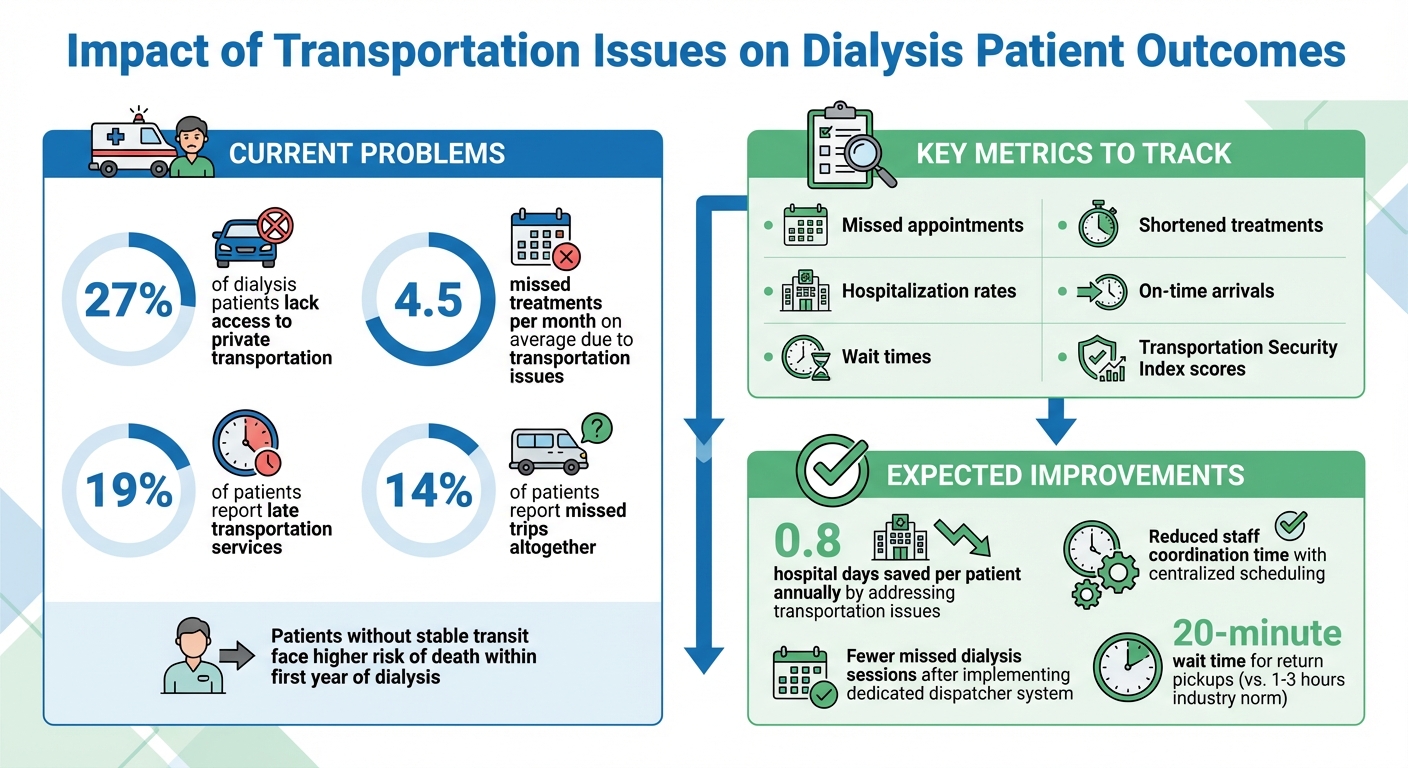
Impact of Transportation Issues on Dialysis Patient Outcomes in Cuyahoga County
Track Key Metrics Before and After Changes
It's essential to monitor key metrics like missed appointments and shortened treatments, as these are closely linked to serious health risks. For example, transportation issues result in an average of 4.5 missed treatments each month.
Hospitalization rates are another critical metric. Missed treatments often lead to emergency interventions, and addressing this problem could save up to 0.8 hospital days per patient annually. On-time arrivals and wait times also matter - 19% of patients report late services, while 14% report missed trips altogether.
The Transportation Security Index offers a comprehensive way to assess transportation reliability. Na'amah Razon, Assistant Professor of Family and Community Medicine at UC Davis Health, highlights its importance:
"This index [Transportation Security Index] could help us identify the symptoms of transportation insecurity and think about specific interventions that could move the needle."
These metrics can guide targeted improvements to transportation services, ultimately enhancing patient care.
Use Data to Keep Improving Transportation Services
Regularly reviewing trip logs and patient feedback is a practical way to spot issues and make improvements. A great example comes from Portland, Oregon, where researchers at Portland State University introduced a centralized scheduling system with a dedicated dispatcher for dialysis trips. After six months of planning and implementation, staff spent less time coordinating rides, patients faced fewer stressful situations like being stranded, and early data showed fewer missed dialysis sessions.
Breaking down data by transportation mode - whether Medicaid NEMT, paratransit, or private pay - can help pinpoint the most reliable options. Tracking these changes over a one-year period provides a clearer picture of sustained health benefits. Additionally, real-time vehicle tracking apps can identify delays and allow for quick fixes, reducing patient frustration with long wait times. These proactive, data-driven strategies highlight how standardized scheduling can significantly improve dialysis outcomes.
Conclusion: Better Transportation Leads to Better Dialysis Outcomes
Having a reliable ride can literally save lives. For dialysis patients, dependable transportation ensures they stick to their treatment schedules, which is critical to preventing life-threatening complications like fluid overload, high potassium, and elevated phosphorus levels. Research shows that patients without stable transit options face a higher risk of death within the first year of starting dialysis compared to those with consistent transportation.
With 27% of dialysis patients lacking access to private transportation, specialized non-emergency medical transportation services are stepping in to bridge the gap. Companies like ReliaWheels offer door-to-door service, including vehicles equipped for wheelchairs and stretchers, making life-saving treatment more accessible.
As Iris Corina, a Community Advisory Board Member for the EnROUTE Study, aptly puts it:
Transportation matters for dialysis patients... More lives can and will be saved when transportation is no longer an issue.
This highlights the pressing need to address transportation challenges, particularly in areas like Cuyahoga County.
By implementing centralized scheduling, assigning dedicated coordinators, and tracking key metrics, we can cut down on missed treatments, reduce hospitalizations, and improve survival rates.
For dialysis patients, reliable transportation isn’t just about convenience - it’s a lifeline that ensures access to the care they need to survive.
FAQs
How does reliable transportation affect dialysis treatment outcomes?
Reliable transportation is essential for dialysis patients, as it ensures they can consistently attend their scheduled treatments. Missing or delaying these appointments can result in serious health issues like fluid overload, electrolyte imbalances, and a higher risk of hospitalizations.
When patients have access to dependable transit, they experience less anxiety about reaching their treatments on time. This reliability supports their ability to stick to care plans and maintain their health. Regular access to dialysis not only improves day-to-day well-being but also lowers the chances of complications, paving the way for healthier long-term outcomes.
What transportation challenges do dialysis patients face in Cuyahoga County?
Dialysis patients in Cuyahoga County often face significant hurdles when it comes to transportation, which can interfere with their treatment schedules and, ultimately, their health. Some of the most common problems include unreliable transit services, a lack of options during emergencies, and logistical obstacles that make it tough to get to appointments on time.
Many rely on specialized transportation programs like Medicaid's non-emergency medical transportation (NEMT), paratransit services, or even taxis. However, these systems are often inconsistent and suffer from insufficient funding. For vulnerable groups - such as older adults or those with disabilities - the situation becomes even more challenging. These individuals need accessible and dependable transit options to maintain their health, but the current systems often fall short.
Making transportation more reliable and accessible is critical for helping dialysis patients stick to their treatment schedules, which is key to protecting their health and improving long-term outcomes.
How does having a transportation coordinator benefit dialysis patients?
A transportation coordinator plays a key role in making sure dialysis patients have access to dependable transportation that meets their specific needs. Dialysis treatments are not only frequent but also time-sensitive, and delays or missed appointments can lead to serious health risks. By organizing schedules and working closely with transportation providers, the coordinator ensures patients get to their treatments on time, helping to prevent missed sessions and supporting better health outcomes.
Beyond scheduling, transportation coordinators also act as a bridge between patients, transportation services, and healthcare facilities. They address important needs like wheelchair accessibility or extra assistance during travel, making the process less stressful for both patients and their caregivers. This not only makes trips more comfortable but also helps patients stick to their treatment plans, which is essential for their overall health and well-being.