Medical transport costs can vary widely, ranging from $5,000 to over $80,000 for long-distance non-emergency services. The price depends on several key factors, including distance, vehicle type, medical care requirements, and insurance coverage. Understanding these elements helps you make informed decisions and avoid unexpected expenses.
Here’s a quick breakdown of the main cost drivers:
- Distance and Route Planning: Providers charge $2–$8 per mile, often with round-trip billing.
- Vehicle Type: Costs range from $25 for ambulatory transport to $200+ for stretcher-equipped vehicles.
- Medical Care Requirements: Advanced Life Support (ALS) services cost 50–100% more than Basic Life Support (BLS).
- Staffing: The expertise of medical staff significantly impacts pricing.
- Timing: Weekday bookings are cheaper; last-minute or weekend trips add extra charges.
- Location and Regulations: Urban areas may have higher rates, while rural areas face longer distances.
- Insurance Coverage: Medicare, Medicaid, or private insurance may cover a portion, depending on medical necessity.
Quick Comparison
| Factor | Cost Impact | Details |
|---|---|---|
| Distance | $2–$8 per mile | Round-trip billing common; longer distances increase costs significantly. |
| Vehicle Type | $25–$200+ base rate | Wheelchair vans ($45–$50); stretcher-equipped ($100–$200+). |
| Medical Care | 50–100% higher for ALS | ALS includes advanced equipment like cardiac monitors or IV support. |
| Staffing | $15–$30 per half-hour wait time | Specialized staff (e.g., paramedics) cost more. |
| Timing | Up to 45% higher for weekends/holidays | Weekday bookings are more affordable. |
| Location | Varies by state and region | Urban areas = higher demand; rural areas = longer travel distances. |
| Insurance Coverage | Medicare covers 80% if deemed necessary | Private insurance varies; Medicaid may reimburse least expensive option. |
For Cleveland residents, companies like ReliaWheels offer transparent pricing and tailored services, helping you manage costs effectively. Always request a detailed quote and verify insurance coverage before booking.
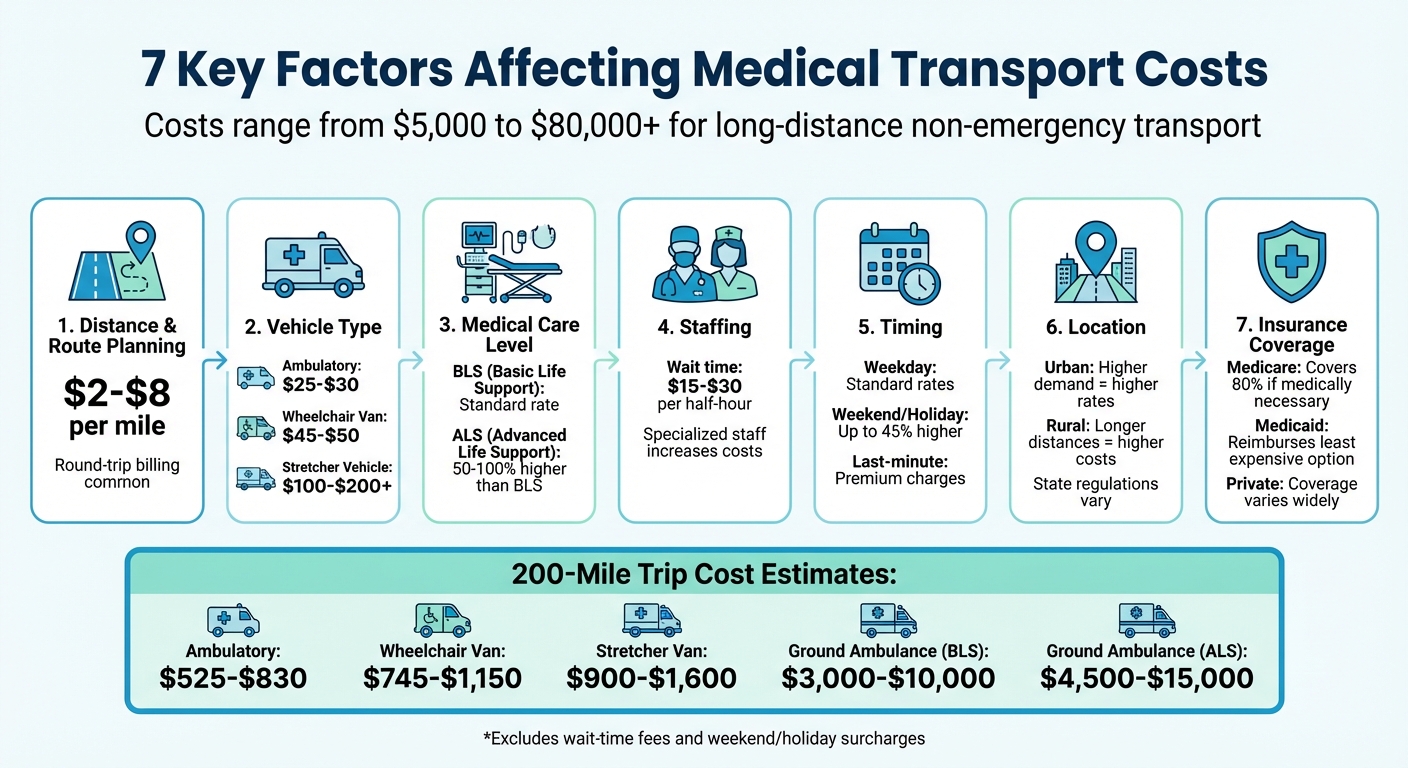
Medical Transport Cost Factors Comparison Chart
1. Distance and Route Planning
Impact on Total Cost
When it comes to transportation costs, distance is a key driver. Providers typically charge between $2 and $8 per mile for state-to-state transport, and many apply round-trip billing. This means a 300-mile trip might be billed as if it were 600 miles.
The total cost is a combination of several factors: a base pick-up fee (which varies depending on mobility needs), mileage rates, and any fees for specialized care or equipment. For example, wheelchair transport usually starts at $45–$50, while stretcher transport begins at $100–$200, not including mileage charges. Additional expenses like tolls or fuel surcharges can also increase the final bill.
Next, let’s dive into how logistical challenges can further influence these costs.
Operational or Logistical Influence
Route planning isn’t just about getting from Point A to Point B. It involves navigating federal Department of Transportation (DOT) and state regulations, managing urban traffic, and dealing with potential delays in rural areas.
"Higher volume of transports, higher proportions of nonemergency transports, and lower government subsidies were associated with lower costs per transport." - GAO
Extended wait times can also add to the cost, with charges ranging from $15 to $30 per half-hour. To avoid these extra fees, some providers use drop-off and return models, which depend on the length of the appointment. These logistical complexities directly impact how flexible providers can be with their pricing.
Flexibility and Customization Options
Companies like ReliaWheels use advanced route planning and clear billing practices to help keep costs manageable. If a trip is deemed medically necessary by a doctor, Medicare Part B may cover up to 80% of the cost.
For patients needing specialized care far from home, securing a physician’s certification of medical necessity can help bypass standard distance restrictions and make insurance reimbursement possible.
How Much Is An Ambulance Ride With Insurance? - CountyOffice.org
2. Vehicle Type and Transport Method
Choosing the right vehicle and transport method is just as important as planning the route and distance when it comes to managing costs.
Impact on Total Cost
The type of vehicle required directly affects the base rate. For ambulatory patients, a medical car typically costs between $25 and $30, while wheelchair-accessible vans start at $45 to $50. If a stretcher-equipped vehicle is needed, expect rates to begin at $100 to $200 or more.
For more complex needs, such as Advanced Life Support (ALS), costs increase significantly compared to Basic Life Support (BLS). ALS vehicles, which come equipped with features like cardiac monitors and IV support, are generally 50% to 100% more expensive than BLS options. Kamran Wali from Infina Health explains:
"Specialized vehicles equipped for specific medical needs, such as bariatric transport vehicles or critical care ambulances, typically come with higher fees due to their enhanced capabilities".
The choice of vehicle is often dictated by the patient's medical condition, which adds another layer of complexity to cost considerations.
Patient-Specific Needs
Your medical condition heavily influences the type of vehicle required. For instance, if you're bed-bound or need continuous monitoring, a stretcher-equipped vehicle with at least two trained staff members is essential. Patients weighing over 250 lbs may require bariatric vehicles, with wheelchair transport starting at $80 and stretcher services ranging from $260 to $300, plus mileage.
For patients needing cardiac monitoring, ventilator support, or IV assistance during transport, ALS-equipped vehicles are typically necessary, and these services come with higher costs.
Flexibility and Customization Options
Beyond the base vehicle costs, it's crucial to review pricing details carefully to avoid unexpected expenses. Check if the provider charges for "deadhead miles", which cover the cost of the vehicle's return trip. This can effectively double the mileage fee. If you require frequent trips, such as for dialysis or therapy, inquire about discounted rates instead of assuming standard round-trip pricing.
To avoid surprise charges, always ask for an itemized breakdown of costs. This should include the base rate, mileage, and any additional fees for specialized equipment or extra staff.
ReliaWheels | NEMT for Cleveland Ohio offers a wide range of vehicles - from basic ambulatory options to fully equipped ALS units - designed to accommodate various medical needs and financial considerations.
3. Medical Care Requirements and Equipment
The type of medical equipment needed for your transportation plays a big role in determining costs. Medical transport is divided into three levels of care: Specialty Care Transport (SCT) for critically ill patients, Advanced Life Support (ALS) for those requiring nurses or paramedics, and Basic Life Support (BLS) for standard monitoring needs. Each level has unique equipment and staffing requirements, which directly impact pricing. Let’s take a closer look at how these equipment needs influence costs.
Impact on Total Cost
The type of equipment required creates a clear cost structure. For example:
- Ambulatory services, which involve basic assistance tools, typically cost $25 to $30.
- Wheelchair transport, equipped with lifts, ranges from $45 to $50.
- Stretcher transport, which often includes oxygen and vital monitors, starts at $100 to $200 or more.
If you move up to ALS services, which include advanced equipment like cardiac monitors and IV support, you can expect to pay 50%–100% more than BLS rates. Overall, ambulance rides can range anywhere from $224 to $2,204, depending on the care level and equipment required.
On top of these baseline costs, specific medical needs can further affect pricing.
Patient-Specific Needs
In many cases, a physician must certify the necessity of certain equipment to qualify for insurance coverage or obtain prior authorization. For example, adding oxygen services typically costs an extra $25, while stair chair assistance also runs about $25. Providing a detailed list of your medical equipment needs when booking transport can help prevent unexpected fees or delays caused by dispatching an inadequately equipped vehicle.
Flexibility and Customization Options
To better understand your expenses, always request an itemized bill from your transport provider. This breakdown will show charges for mileage, staffing, and specialized equipment, helping you spot any unexpected fees. Kamran Wali from Infina Health explains that specialized vehicles "typically come with higher fees due to their enhanced capabilities". For patients who require frequent transportation, such as for dialysis treatments, it’s worth asking about discounted rates for regular scheduling instead of paying standard per-trip prices.
If you're in the Cleveland area, ReliaWheels | NEMT for Cleveland Ohio offers non-emergency medical transportation tailored to your equipment and care needs, ensuring a safe and reliable experience for every ride.
4. Staff Qualifications and Crew Size
The type of medical professional assigned to your transport - whether it's an EMT, paramedic, nurse, or physician - plays a big role in determining costs. In fact, personnel expenses make up the largest portion of medical transport pricing and are a key factor in rising annual costs. Understanding the level of staffing you actually need can help you avoid unnecessary expenses.
Impact on Total Cost
Advanced Life Support (ALS) services, which require paramedics or nurses trained to administer medications and perform cardiac procedures, often cost 50% to 100% more than Basic Life Support (BLS) due to the higher level of expertise required. Critical care teams, which handle the most complex cases, come with the highest fees. Additionally, wait-time charges vary depending on the crew. For stretcher-level staff, expect to pay $15–$30 per half-hour or $45–$100 per hour. Your medical needs directly influence the crew composition, which we’ll look at next.
Patient-Specific Needs
Just as the type of vehicle and equipment impacts costs, your medical condition determines the expertise required from the staff. For instance, patients needing ventilators, cardiac monitoring, or bariatric support will require staff with specialized training and access to advanced technology. On the other hand, stable patients might find a commercial flight escort to be a more cost-effective option while still receiving professional oversight. To avoid paying for services you don’t need, consult with your doctor to confirm the necessary medical staffing. Keep in mind, Medicare and private insurers often require a written order from your doctor confirming that medical transport is essential for them to cover the cost of specialized staff.
Flexibility and Customization Options
To better manage costs, ask for an itemized quote that breaks down charges for mileage, equipment, and the qualifications of the assigned staff. This transparency allows you to see exactly what you’re paying for and identify any unnecessary fees. If you need transport regularly - such as for dialysis - ask about discounted rates for recurring trips with a specific crew size, rather than paying the standard single trip rate each time. Be aware that high-level crews, like those for Specialty Care Transport, often require 24 to 48 hours advance notice to ensure availability.
sbb-itb-a0ce227
5. Scheduling and Trip Timing
Trip timing plays a major role in determining transportation costs. It's not just about convenience - it’s one of the easiest ways to manage expenses effectively.
Impact on Total Cost
Timing your trips wisely can significantly lower expenses. For example, scheduling wheelchair transport during weekdays can drop base fees from around $100 to roughly $45. On the other hand, traveling during off-hours can add over $200 in mileage charges for a 100-mile trip. Additionally, wait-time fees - ranging from $25 to $100 per hour - can quickly inflate costs. These differences highlight how much timing and planning can influence your overall spending.
Operational and Logistical Influence
Last-minute bookings, especially those made within 24 to 48 hours, create logistical hurdles and drive up costs. Cliff James, VP of Program Performance and Analytics at Healthesystems, sheds light on the issue:
"Nearly every industry has grappled with employee shortages in the past few years, and transportation is no different".
This labor shortage often results in urgent requests being either unfulfilled or handled at a premium cost due to the need for quick mobilization. By booking in advance, providers can use route optimization software and coordinate shared routes, which can significantly reduce costs. As discussed earlier, smart booking practices are key to keeping transport expenses under control.
Flexibility and Customization Options
If your medical needs allow for some flexibility, you can save even more. Scheduling appointments mid-week - typically Tuesday through Thursday - rather than on weekends often results in the lowest rates. Medical Air Service emphasizes this point:
"Flexible scheduling for non-urgent cases allows flight coordinators to optimize routing, coordinate shared flights, and secure cost-effective solutions".
For recurring trips, such as those for dialysis or therapy, ask about volume discounts. If you're arranging long-distance transport, check whether the provider charges for the return trip. Adjusting your appointment by a day or two might allow them to arrange a "back-haul", which could lower your mileage fees.
For residents of Cleveland seeking non-emergency medical transportation, providers like ReliaWheels | NEMT for Cleveland Ohio stress the importance of advanced scheduling and flexible timing. Their focus on route optimization helps patients manage costs more effectively.
6. Location and State Regulations
Where you live plays a big role in determining medical transport costs. The U.S. doesn’t have a uniform pricing system - rates shift depending on state regulations, local market dynamics, and regional operating expenses.
Impact on Total Cost
State Medicaid reimbursement rates significantly influence what providers charge. Beyond these rates, providers must comply with state-specific insurance and regulatory requirements, and the associated costs often trickle down to patients. Urban areas tend to have higher rates due to traffic congestion and greater demand, while rural regions face elevated costs because of longer travel distances and fewer service options. To address this, Medicare offers rural adjustments, such as increasing mileage rates by 50% for the first 17 miles in rural areas to help offset these challenges. This patchwork of regulations adds layers of complexity for both patients and providers.
Operational or Logistical Influence
State-specific rules don’t just affect costs - they also shape how services are delivered. Staffing requirements, for example, differ between states. For Basic Life Support (BLS) transport, at least one crew member must hold an EMT-Basic certification, as determined by the state or local authority. Similarly, what qualifies as an Advanced Life Support (ALS) procedure can vary, forcing providers to adapt their protocols depending on the location.
Medicare also uses a Geographic Adjustment Factor (GAF), which applies to 70% of the base rate. Providers must report the pick-up location’s zip code to ensure accurate billing. In "super-rural" areas - those with the lowest population density - ground ambulance transports increased by 41% between 2004 and 2010, with nonemergency BLS transports in these regions seeing an 82% rise during the same period. Providers who fail to submit required cost and usage data to Medicare risk a 10% payment reduction.
Flexibility and Customization Options
In some states and counties, financial assistance programs can help reduce out-of-pocket expenses. For example, Bexar County’s Carelink program provides subsidies for transportation to uninsured or low-income residents. It’s worth exploring whether similar programs exist in your area. For Cleveland residents needing non-emergency medical transport, ReliaWheels | NEMT for Cleveland Ohio operates under Ohio’s regulatory guidelines and can assist with navigating state-specific coverage and aid options. Understanding your local regulations and available resources can help you manage transportation costs and avoid unexpected charges.
7. Insurance Coverage and Payment Options
Insurance coverage is a key factor in determining the overall cost of medical transport. Just like distance, vehicle type, and specific care needs, the level of insurance coverage can significantly impact what you'll pay out of pocket. For example, Medicare covers non-emergency transport only when it's deemed medically necessary and backed by a doctor's order. On the other hand, private insurance policies vary widely, and non-emergency cases often require the patient to cover the costs themselves. Routine checkups typically fall into this category, meaning you'll likely be paying out of pocket.
Impact on Total Cost
Reimbursement from insurance often doesn't fully cover the provider's expenses. In 2010, the median Medicare margin for ambulance providers was just +2% with add-on payments and dropped to -1% without them. That same year, the median cost for a ground ambulance trip was $429, though costs ranged from as low as $224 to as high as $2,204 depending on the provider. Medicare’s fee schedule, which includes add-on payments for specific areas, increased payments to providers by $175 million in 2011. However, the type and intensity of the transport - such as Basic Life Support (BLS) versus Advanced Life Support (ALS) and emergency versus non-emergency services - play a major role in determining reimbursement rates. These financial challenges often lead providers to explore more flexible payment options.
Flexibility and Customization Options
When insurance coverage doesn’t fully cover costs, having flexible payment options becomes essential. In some states, Medicaid is required to reimburse only for the "least expensive mode" of transport that meets the patient’s medical needs. Additionally, balance billing is not allowed, meaning providers must accept the state-approved rate as full payment. For children under 21, the EPSDT benefit guarantees transportation without any cost-sharing or co-pays.
If you're paying out of pocket, it’s smart to request an itemized quote that breaks down costs like pick-up fees, mileage, and charges for specialized care. For those in Cleveland, Ohio, needing non-emergency medical transport, ReliaWheels | NEMT for Cleveland Ohio can assist with navigating Ohio’s coverage requirements and offer transparent pricing for both insured and private-pay customers.
Cost Comparison Table
The table below outlines how various factors like vehicle type, distance, and medical care level can impact the cost of long-distance medical transport. Use this breakdown to better understand what to expect on your final bill.
| Transport Type | Base Rate (Weekday) | Mileage Fee (Per Mile) | 200-Mile Trip Estimate | Ideal For |
|---|---|---|---|---|
| Ambulatory (Standard Vehicle) | $25 - $30 | $2.50 - $4.00 | $525 - $830 | Patients who can walk with minimal assistance |
| Wheelchair-Accessible Van | $45 - $50 | $3.50 - $5.50 | $745 - $1,150 | Patients using wheelchairs, walkers, or scooters |
| Stretcher Van | $100 - $200 | $4.00 - $7.00 | $900 - $1,600 | Patients who must remain prone or need monitoring |
| Ground Ambulance (BLS) | Varies | Varies | $3,000 - $10,000 | Stable patients requiring EMT supervision |
| Ground Ambulance (ALS) | Varies | Varies | $4,500 - $15,000 | Patients needing paramedics, IV support, or cardiac monitoring |
It’s important to note that these estimates exclude extra charges like wait-time fees or higher rates for weekends and holidays. Wait-time fees typically range from $15 to $30 per 30 minutes. For weekend or holiday trips, base rates can increase by 25% to 45%. Additionally, many providers charge for round-trip mileage, even for one-way trips, to account for the vehicle's return to its starting location.
If you’re in Cleveland, you can get detailed, itemized quotes from ReliaWheels | NEMT for Cleveland Ohio. This transparency helps you plan and manage your transportation expenses with confidence.
Conclusion
By understanding these seven cost factors, you can make smarter decisions and avoid unexpected charges. For instance, knowing that mileage and specialized care options can significantly raise costs allows you to plan ahead. This knowledge forms a solid foundation for organizing your transportation needs effectively.
To avoid surprises, always request a detailed, written estimate and verify insurance coverage early in the process. For example, Medicare Part B typically covers 80% of medically necessary ground transport costs. Additionally, booking your ride at least 24 to 48 hours in advance can help you secure standard rates and steer clear of last-minute fees.
If you're in Cleveland, tapping into local expertise can make a big difference. Providers like ReliaWheels | NEMT for Cleveland Ohio specialize in offering upfront, itemized quotes and customized transport options, ensuring you only pay for the care you actually need.
Careful planning and clear communication with your provider can help you manage expenses while ensuring safe and dependable transportation. By staying informed about these cost drivers and planning ahead, you can keep control of your budget and ensure you receive the level of care that fits your needs.
FAQs
What are some tips to reduce the cost of long-distance medical transportation?
To manage expenses for long-distance medical transportation, here are some practical suggestions:
- Opt for ground transportation whenever feasible, as it's generally less expensive than air travel.
- Select the smallest suitable vehicle for your needs, such as a wheelchair-accessible van instead of a larger, more specialized option.
- Minimize extra services, equipment, or staff to only what is absolutely necessary for medical care.
- Verify whether your insurance covers part of the transportation costs to help reduce out-of-pocket expenses.
- Ask for a detailed, mileage-based quote in advance. Rates typically range from $2 to $8 per mile, depending on factors like distance and the level of care required.
With thoughtful planning and a trustworthy provider, you can secure safe transportation without overspending.
What factors should I consider when choosing a vehicle for medical transportation?
When choosing a vehicle for medical transportation, it’s essential to align the patient’s specific needs with the appropriate type of transport. For ambulatory patients - those who can walk with some assistance - a standard sedan or van often works well and tends to be a more budget-friendly option. For wheelchair users, a wheelchair-accessible van with a ramp or lift is necessary. Meanwhile, patients requiring a stretcher or constant medical monitoring will need a specialized vehicle equipped with advanced medical gear and staffed by trained professionals.
Several factors can influence the overall cost of medical transportation. These include the distance of the trip, the level of care the patient needs during transit, and any specialized equipment required, such as oxygen tanks or IV pumps. It’s also crucial to ensure the vehicle meets safety standards and offers features like secure restraints, climate control, and easy entry to enhance patient comfort and safety.
Providers like ReliaWheels in Cleveland, Ohio, cater to these needs by offering a variety of vehicles, including wheelchair-accessible vans and stretcher-equipped options. This ensures that patients receive the appropriate care and comfort throughout their journey.
How does insurance impact the cost of medical transportation?
Insurance can play a big role in cutting down the costs of medical transportation. For instance, Medicare Part B covers ambulance services when a patient's condition makes regular travel unsafe. This might include emergencies, trips for dialysis, or transportation to a skilled nursing facility. On the other hand, Medicaid offers non-emergency medical transportation (NEMT) benefits for those who qualify, though the specifics - like coverage details and prior authorization - vary from state to state. Private insurance plans also tend to cover a portion of the costs, but they usually assess the medical necessity first. Patients may still be responsible for co-pays or any charges that exceed their plan's coverage limits.
Without insurance, medical transport costs can range anywhere from $500 to over $3,500. With insurance, those out-of-pocket expenses generally drop to $250 to over $1,500, depending on the plan and specific medical needs. In Cleveland, Ohio, ReliaWheels works closely with Medicare, Medicaid, and private insurers to verify eligibility, take care of authorizations, and manage billing. This helps clients keep costs down while ensuring they receive the care and equipment they need for their journey.